Double bill
Piece of Mind Collective + Maude Lecours & Gabrielle Marquis
ÉDIFICE WILDER | Espace Vert
November 28, 2026 - 7pm
November 29, 2026 - 4pm
November 30, 2026 - 7pm
December 1, 2026 - 7pm
Discussion with the artists on November 30
The order of the pieces is subject to change.


Piece of Mind Collective
Piece of Mind: Parkinson’s
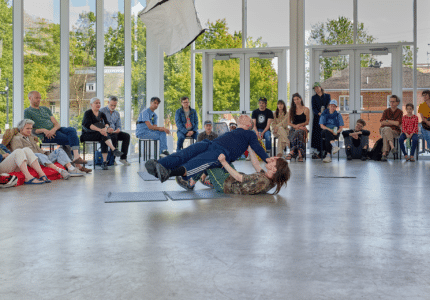
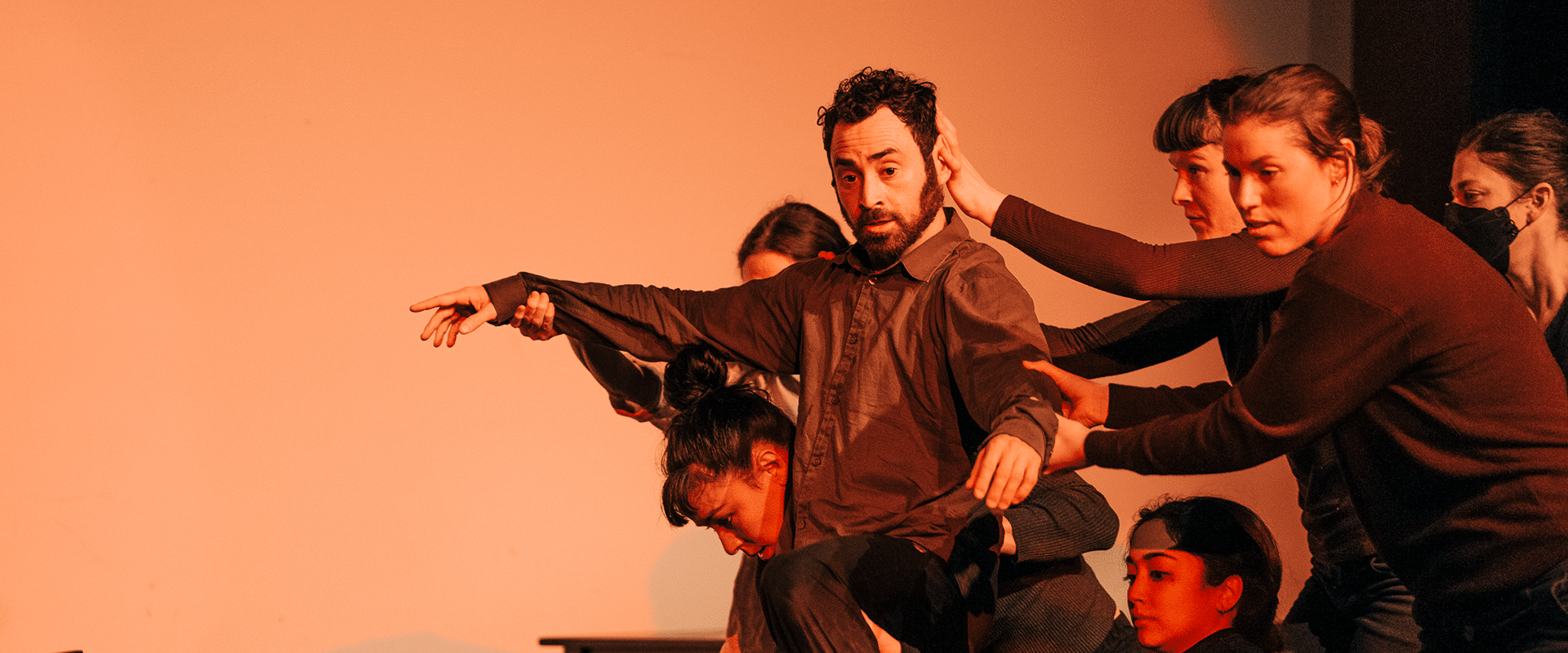
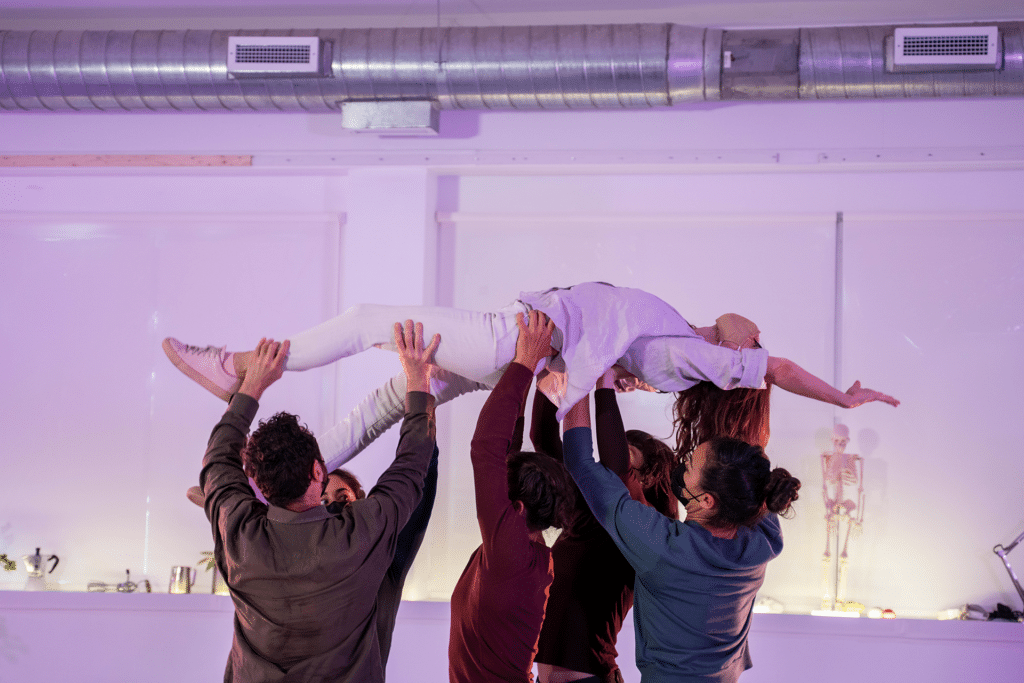
How do we relate to the world from within a communication breakdown between mind and body? How does the world relate to us? Piece of Mind: Parkinson’s provides a glimpse of what it’s like to live with this neurodegenerative condition by intermingling dance, circus, theatre and testimonials to bridge stories of lived experiences and scientific knowledge. Co-created by people with Parkinson’s, their loved ones, neuroscientists and artists, this group piece provokes reflection on how we coax the body into action when it ceases to obey; how we endure the gap between inner feeling and external (mis)perception; and how we find new ways to navigate life when our day-to-day life is destabilized.


With the support of Conseil des arts de Montréal, Conseil des arts et lettres du Québec, Canada Council for the Arts, Canadian Institutes of Health Research, Healthy Brains Healthy Lives, Étude partenariale sur la médiation de la musique, Canadian New Music Network, Parkinson Québec, Mitacs
Residencies THROW 2 CATCH, Espace Ouvert, Coeur des sciences UQAM, Proto studio, Biosignal Interaction and Personhood Technology Lab, HUPR Research Centre for Human Potential, Centre for Research in Brain, Language and Music, Centre for Oral History and Digital Storytelling
Naila Kuhlmann is a researcher in neuroscience, performing arts and social innovation at HUPR Research Centre for Human Potential (National Circus School, Montréal). While her formal education is in neuroscience with an expertise in Parkinson’s disease, Naila has trained in dance and circus for over 17 years and has focused her academic career on art-science collaborations and artistic co-creation. She founded the Piece of Mind Collective in 2018, leading to the co-creation of two interdisciplinary performances (Piece of Mind: Parkinson’s and Dementia) that unite lived experience and scientific research on stage. She subsequently led the co-creation of Living Rooms: une pièce partagée, a work-in-progress immersive performance that invites the audience into embodied experiences of Parkinson’s and circus. Naila’s ongoing participatory research-creation explores how live arts and technologies may serve to connect and communicate across neurological differences, particularly where words fall short.
Graduating in 2004 from the National Circus School, Jérémie Robert specializes in Korean board, Cyr wheel and character performance, for which he has won festival awards. He has performed over 3,000 shows across 6 continents with companies such as Les 7 doigts, Cirque du Soleil, Circus Monti, Compagnie XY, Cirque Éloize, and Kalabanté. Alongside his performing career, he explores creation as a director and designer for Cirque du Soleil, Circus Monti, the National Circus Schools of Châtellerault and Montréal, as well as with his own company, THROW 2 CATCH, where he serves as co-artistic director. Driven by a passion for sharing his craft, he teaches from Japan to Guinea and even in Nunavut, both in professional settings and in social circus contexts.
Anne McIsaac is a performer. She’s not the one to say so though, she never thought life would bring her there. After a busy career in design and advertising where she co-founded a communications agency, provided artistic direction for countless projects, and then was one of the first influencers and photographers on social networks, she finds a new path in the transmission of lived bodily experience and in the interpretation of it on video and on stage.
Marie-Ève Dicaire began her artistic journey as a dancer, but after three years, she felt that something was missing, though she didn’t yet know it was the circus. She auditioned for the National Circus School of Montréal, where she was accepted as a hand balancer, and therein quickly discovered a rare blend of precision and fluidity. Since graduating in 2006, she has performed around the world with numerous companies, including Circus Monti, Circus Starlight, Cirque Plume, Cirque Éloize, Cirque du Soleil, and The 7 Fingers. Marie-Ève continues to evolve as a dancer, only now she does it while balancing on her hands.
Greg “Krypto” Selinger has interpreted for Solid State and choreographed the trio Still Milking the New Sacred Cow under the mentorship of Victor Quijada. Greg’s work often blends dance and spoken word. His autobiographical danced monologue A Piece of: My Heart (Breaking) has been presented in Canada, Germany, and Mexico. He is the founder of the interdisciplinary improvisation collective Body Slam. In 2015, he interpreted for The Dietrich Group’s Dora award-winning piece This is a Costume Drama. Recently, he has toured with Rhodnie Désir’s Symphonie de Cœurs, Piece of Mind Collective, and Travis Knights’s The Mars Project, which he co-produced.
Laurie “Quantalock” Archambault has been practicing Campbellocking (locking) for 20 years under the pseudonym Quantalock, a name that combines her scientific profession and her dance style. Her practice evolves mainly in the improvisation scenes of the battle and the cypher. Her authentic, dynamic and open presence to others constitute her artistic signature. Quantalock teaches locking, choreographs and interprets pieces with the collective LockUnity, organizes events, etc. Quantalock explores more personal ideas with solo residencies at B-side and MAI (Montréal, arts interculturels).
Heidi Blais is a self-taught circus artist whose practice merges hand-balancing, partner work, and slackline to explore breath, resilience, and the body’s capacity to adapt. Her recent solo Urge to breathe integrates apnea training and handstands into an embodied metaphor for rising levels of atmospheric carbon dioxide. She has crossed two world-record 2km highlines and performed with Cirque Branché, Cirque Éloize, and at The 7 Fingers special events and in various independent projects. A certified yoga and acroyoga instructor, Heidi co-leads teacher training with Acroyoga Montréal. Her earlier career in architecture shapes her interdisciplinary approach to space, structure, and creative problem-solving in movement.
Claire Honda is a scientist and artist who is passionate about dance, music, languages, and the brain. She completed a PhD in neuroscience at McGill and is now the coordinator of the Centre for Research on Brain, Language and Music (CRBLM). She has been playing the violin since the age of four, and she is also an avid tap dancer who has performed with the TapCo Youth Ensemble and traveled to tap dance events around the world. She is passionate about bringing together scientific and artistic endeavours and about promoting connection between people with diverse backgrounds and perspectives.
Anusha Kamesh is a postdoctoral researcher studying the link between Parkinson’s disease and stress. She is also a classically trained pianist, composer, producer, and singer. While completing her PhD in neuroscience, she blended her scientific and musical backgrounds to compose for art/science initiatives including Piece of Mind and the Convergence Initiative. In 2026, she will release her first studio album, which deep dives into her relationship with her own mental health.
Our co-creative process is interdisciplinary and relational, shaped by encounters between lived experience of Parkinson’s disease, scientific research, and artistic practice. Bringing together people from different horizons, we place great care in creating common ground somewhere between words, music, metaphor, and movement. Starting from a place of genuine curiosity towards one another’s embodied, experiential and theoretical knowledge, we deepen our joint inquiry by translating stories, ideas and information from one artistic medium to another, allowing new shared meanings to emerge. We embrace the constraints of chronic illness and disability as creative potential, considering how the continually shifting and unpredictable reality of living with Parkinson’s informs artistic approaches and shapes performance aesthetics.
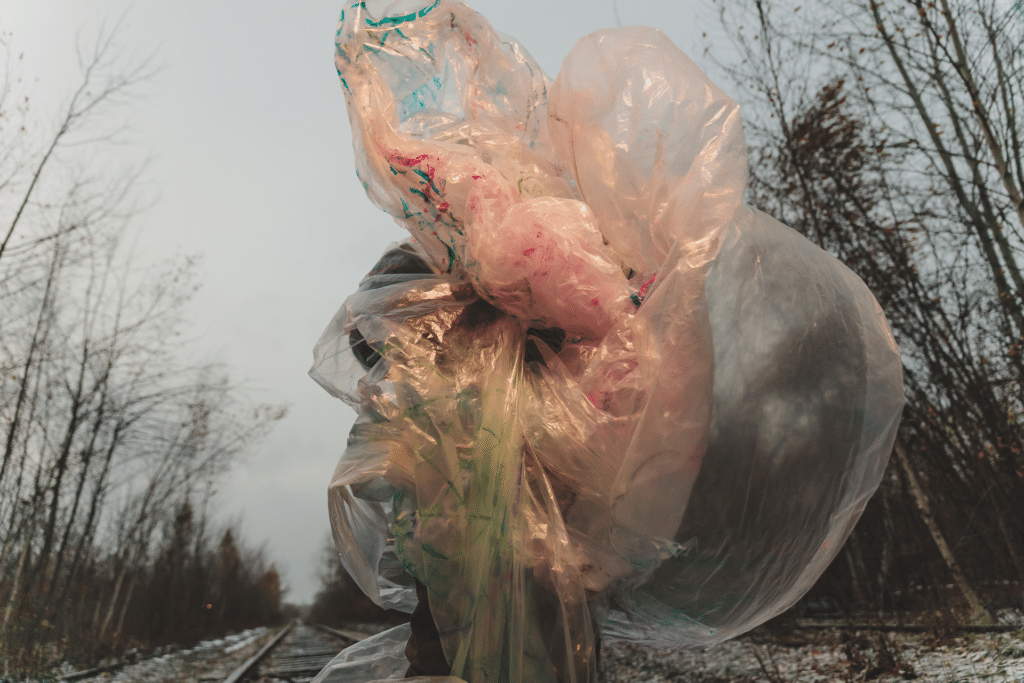
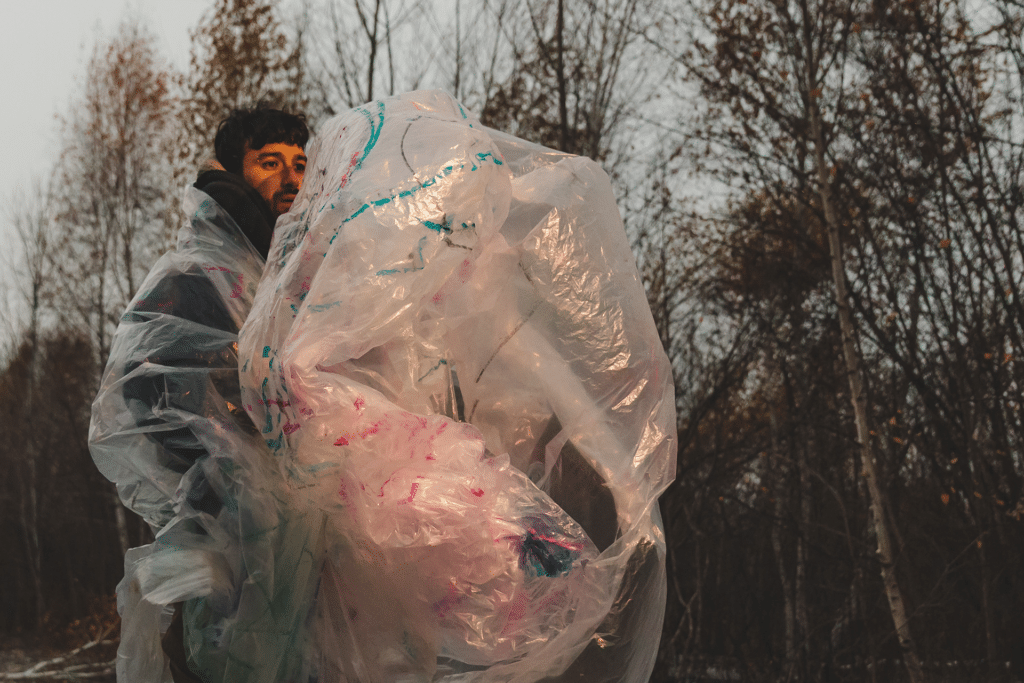
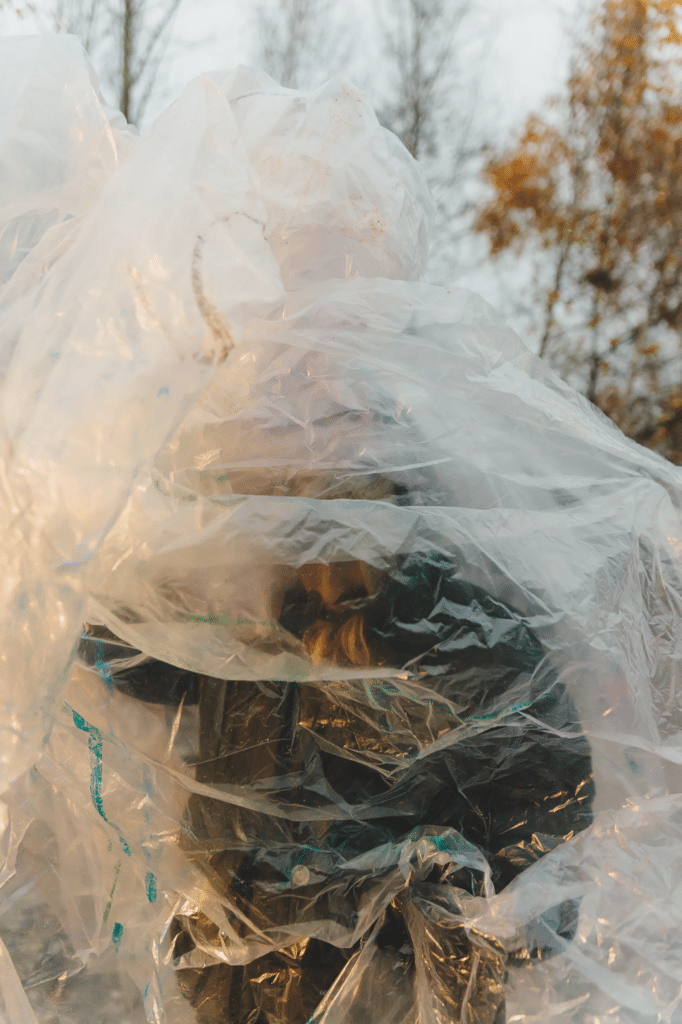
Maude Lecours & Gabrielle Marquis
Regarde ailleurs
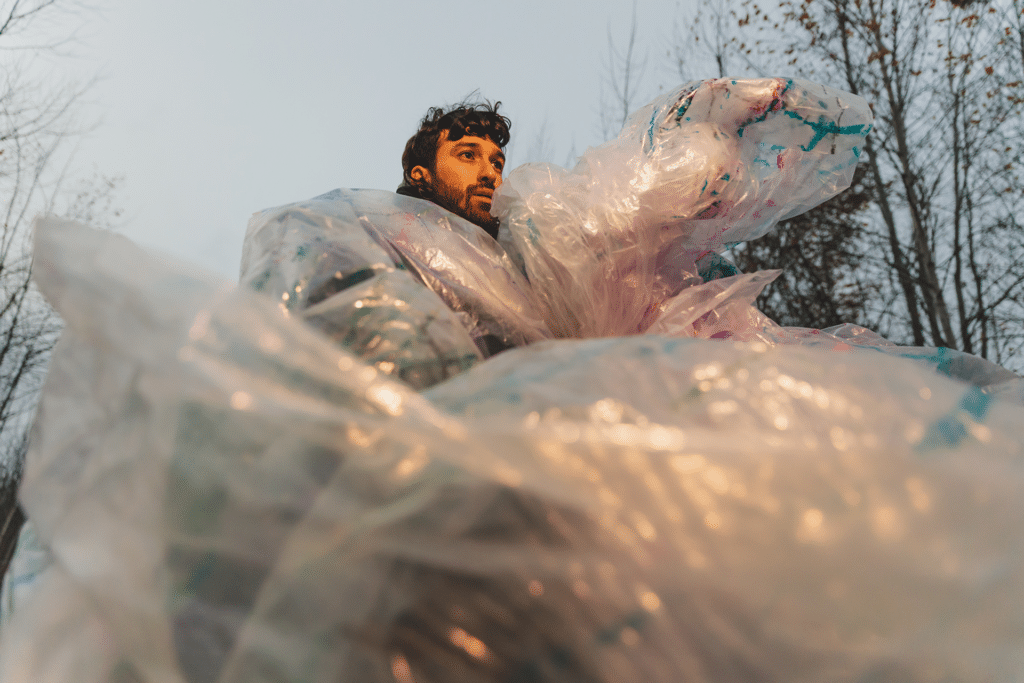
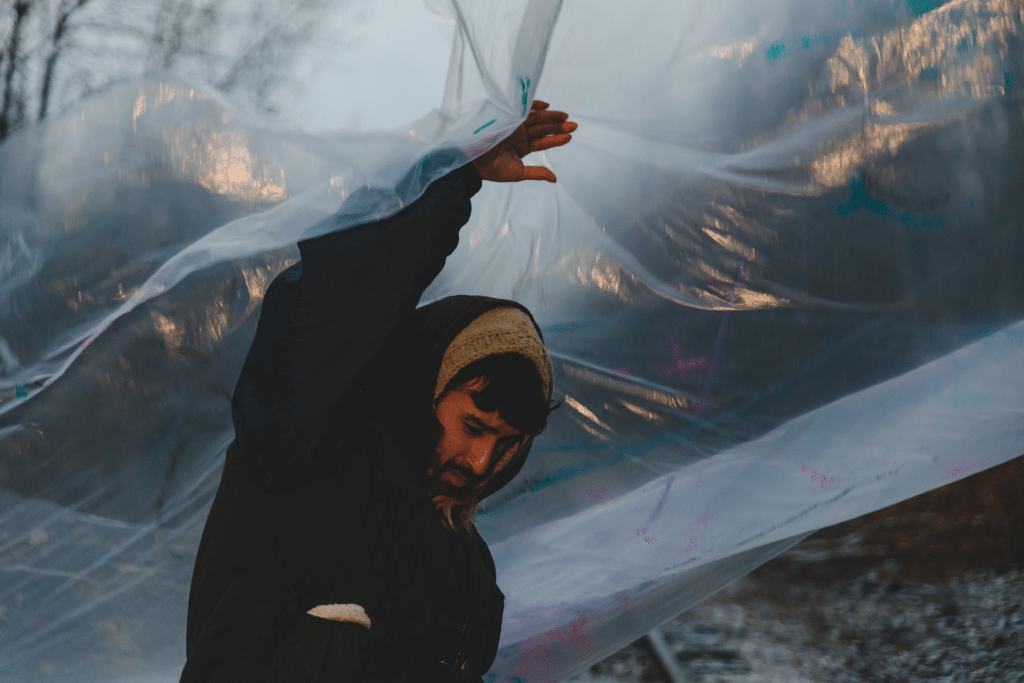
A multidisciplinary and interactive performance combining contemporary dance and live music, Regarde ailleurs translates into sound and movement a dialogue about boundaries between children and people experiencing homelessness. The piece reflects the distinct realities of these two seemingly opposite groups, who are nonetheless connected by similar emotional responses to the constraints imposed on them. Throughout the performance, the vibrant world born from the children’s imagination meets the more concrete reality of the daily lives of those without a home. Their parallel perspectives converge in a space where aspirations of dignity and pride prevail as they envision a future built on solidarity.




With the support of Conseil des arts et des lettres du Québec, Table de concertation du Faubourg St-Laurent
Residencies Le BEAM – Bureau Estrien de l’Audiovisuel et du Multimédia, Maison de la culture Janine-Sutto
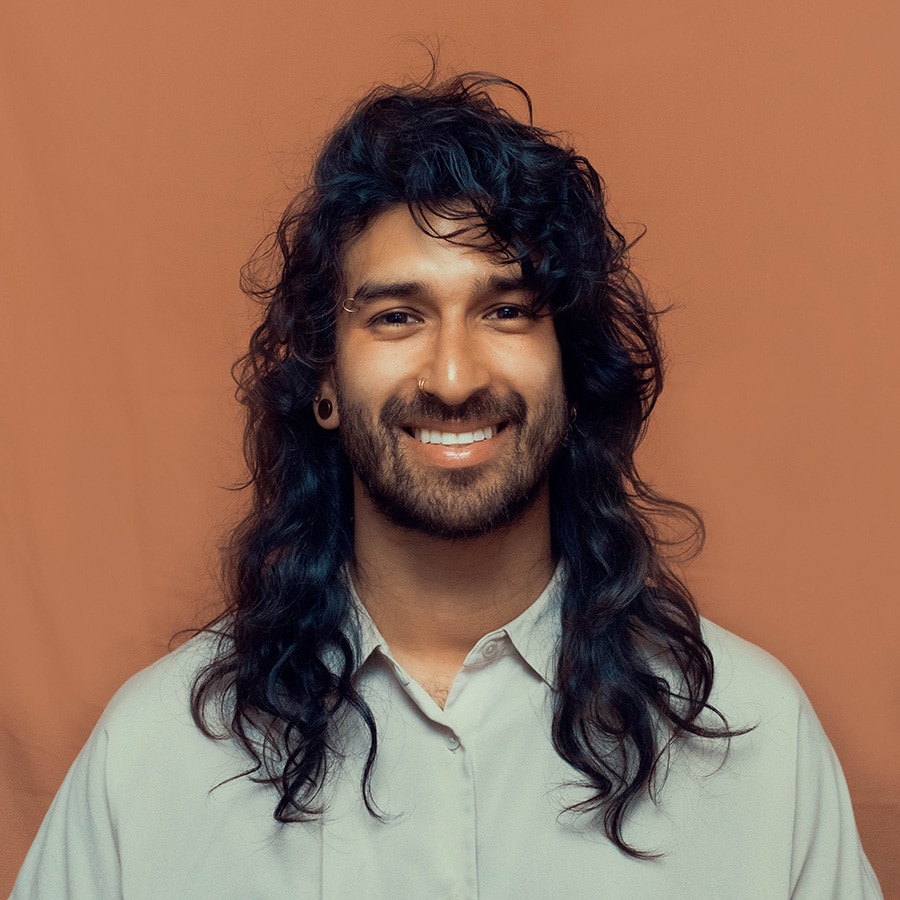
Maude Lecours is a multidisciplinary artist specializing in contemporary dance. In 2013, she founded the Flamant company, dedicated to dance-video, before creating, in 2018, the project Faire danser un village, which celebrates humanity and the bond of belonging through dance. Through her choreographic creations, Maude invites audiences to experience immersive, sensitive and profound moments. Her artistic approach explores bodily memory and brings people together through performances that foster connection, strengthen social bonds and amplify the joy of being together.
Gabrielle Marquis’s practice is primarily rooted in music and sound. She is currently involved in creating multidisciplinary performances and workshops. Her creative process involves engaging with people of all ages and backgrounds, often with unconventional life experiences. She draws inspiration from their perspectives to create inclusive work that celebrates the diversity of their personal histories. Her goal is to stimulate her audience’s curiosity about sensitive topics, but above all to offer them moments of contemplation while contributing to their aesthetic enjoyment and development.
Rodrigo Alvarenga-Bonilla began dancing at the age of five, joining a Salvadoran and Mexican folk dance troupe. He started learning hip hop, popping and breaking at youth centres, teaching himself the basics. He then took classes at Studio Party Time in Québec City, and joined PNT Dance Company and the MARVL collective. A 2019 graduate of École de danse contemporaine de Montréal, Rodrigo continues his breaking practice while working for various contemporary dance companies.
Mickhail Eustache describes himself as a punk rocker and a lover of French cuisine. A professional chef, Mickhail has an eye for detail and understands the care that goes into the creative process. He brings this expertise to what is, for him, a new experience: the creation of a show. Mickhail joined the project team in 2023, while receiving support from La Casa Bernard-Hubert, an organization that assists all individuals who identify as men who are experiencing homelessness or at risk of becoming homeless. Since then, he has been an integral part of the creative team and is taking the stage for the very first time.
Julien Beaumier is a composer and sound designer. Driven by the dialogue between image and sound, he explores how music can transform or enhance a visual narrative. After studying audiovisual electronics and working in television, he pursued studies in sociology and visual arts. There, he discovered that sound and music were the common thread running through all of his research. He refined his sonic language through numerous artistic collaborations. He became an assistant to the sculptor Jean Brillant, and later to the composer Pierre-Philippe Côté. His work combines sensitivity, sound experimentation, and technical exploration.
Gabrielle Doucet is a multidisciplinary artist trained in set design at the Conservatoire d’art dramatique de Québec, where she graduated in 2014. She began her career collaborating with theatres Le Trident and La Bordée. Simultaneously, she held several exhibitions with the Canadian visual artist collective Bacon, and her work was represented by Galerie Dépliée in 2016. In 2019, she pursued a bachelor’s degree in creative programming at UQAM and, in 2022, she joined Cirque du Soleil as an assistant and project manager. In 2025, she designed the set and accessories for the show Le show beige, presented at La Licorne.
Initially, we explored our relationship with personal and collective boundaries and the societal understanding of these, sometimes dictated by customs, sometimes conceived as markers to promote the well-being of communities. To deepen our reflections, we embarked on a research project with two distinct groups: elementary school children and men who had experienced homelessness. This project took the form of an artistic exchange between the two groups through the sharing of artwork and discussions on the theme of boundaries. These works, compiled into a sound book, served as the basis for the creation of the performance. Regarde ailleurs was born from our intention to juxtapose the perspectives of the children and the men on the same concept. The performance fosters their coexistence, like good neighbours, whether housed or not.