Double bill
Diego Gil + Peng Hsu
ÉDIFICE WILDER | Espace Orange
October 8-10, 2026 - 7pm
October 11, 2026 - 4pm
Discussion with the artists on October 9
The order of the pieces is subject to change.
Diego Gil
El sentir de las superficies
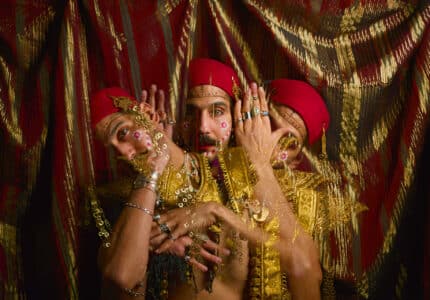
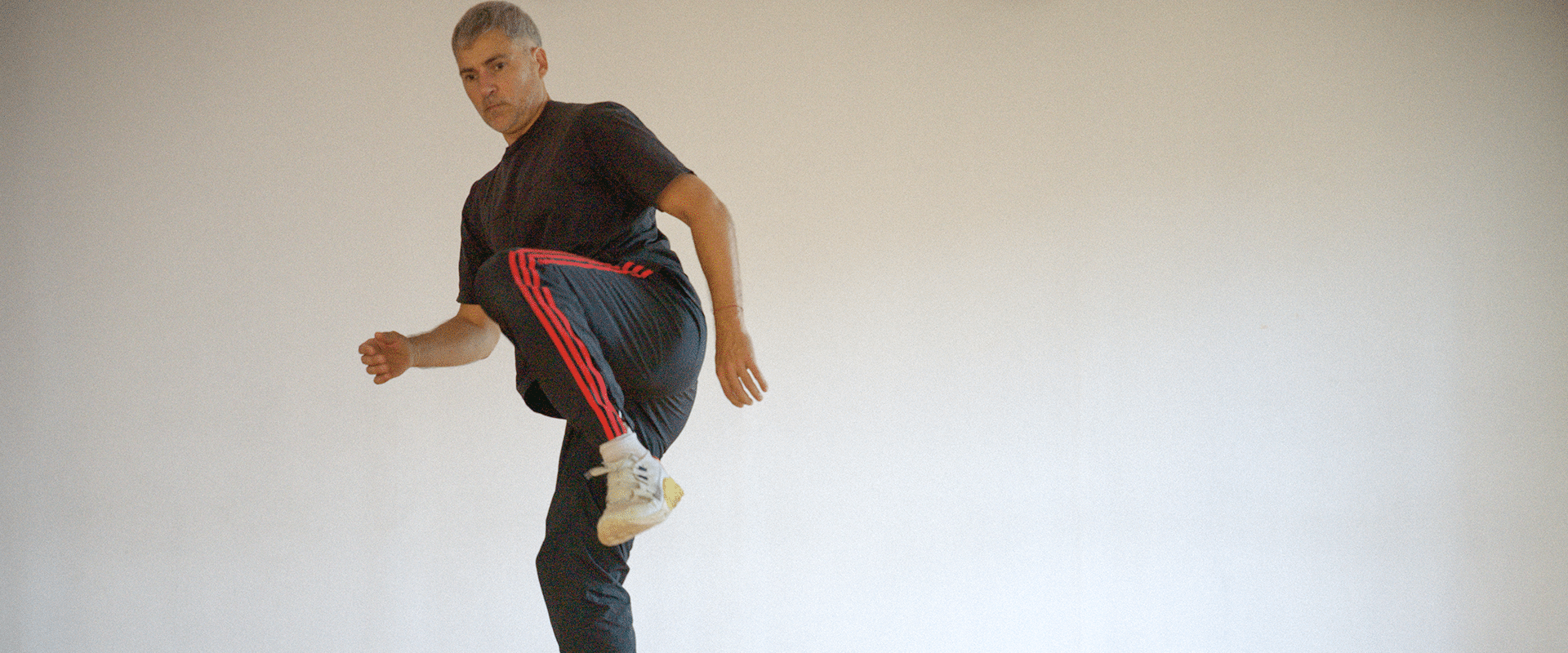
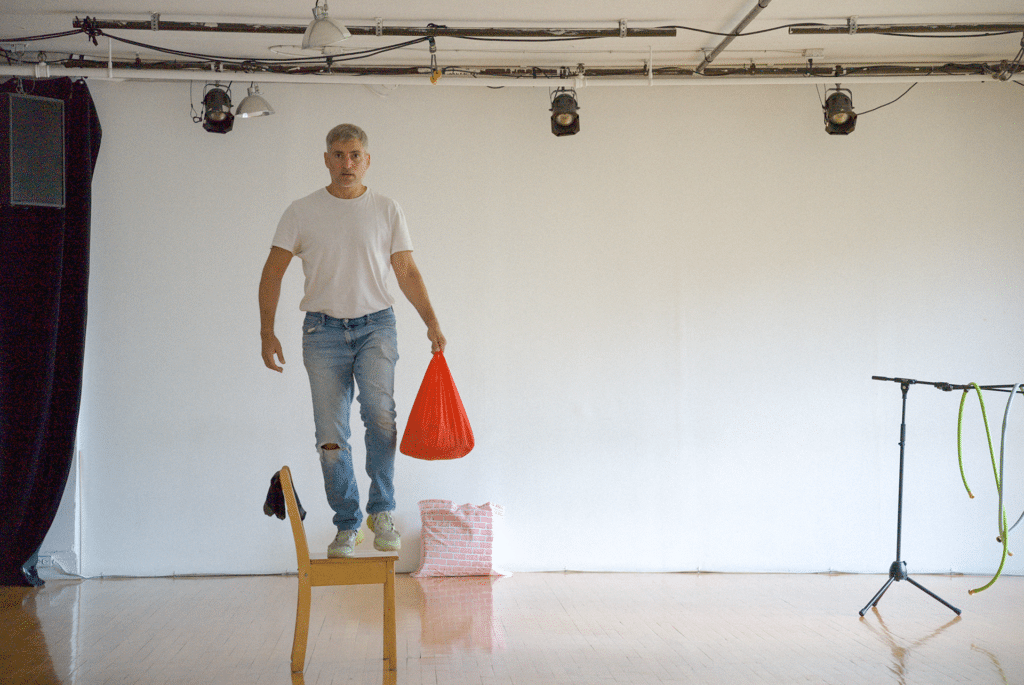
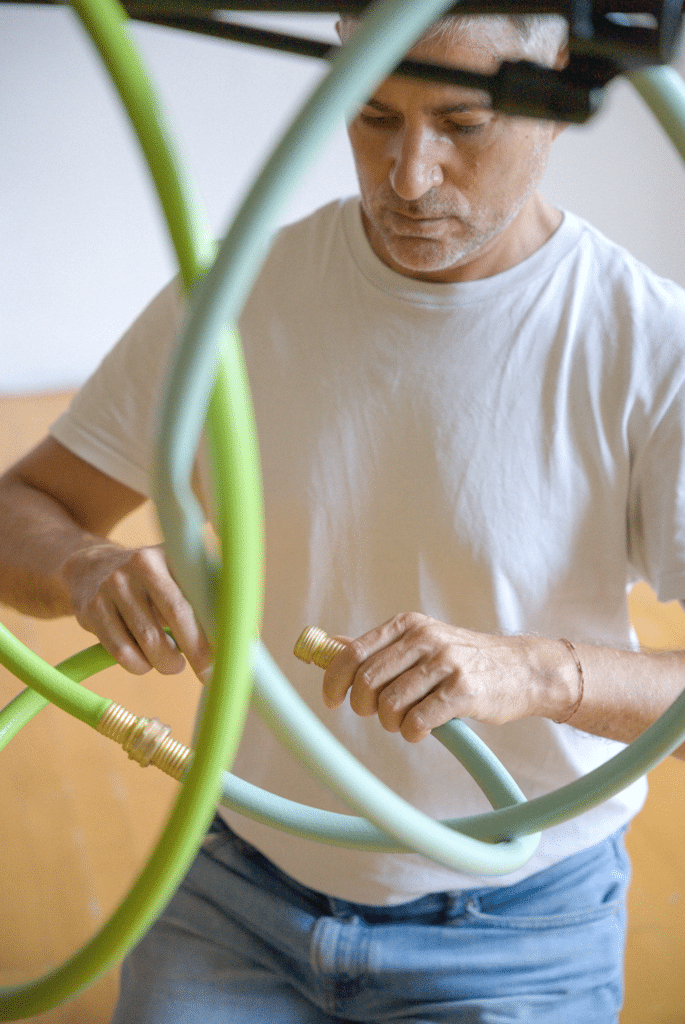
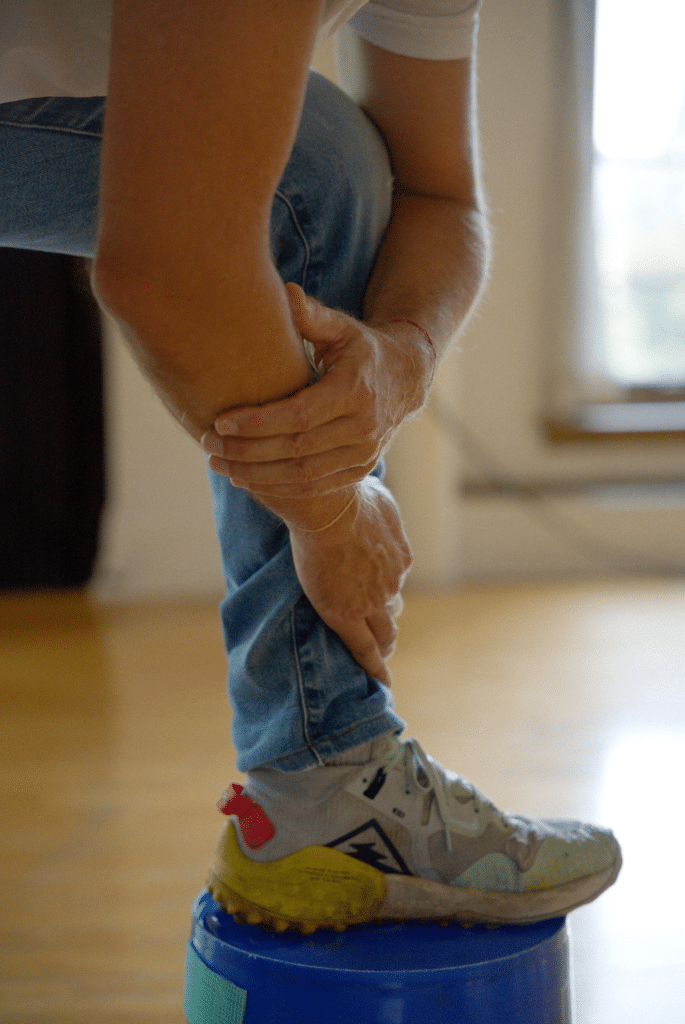
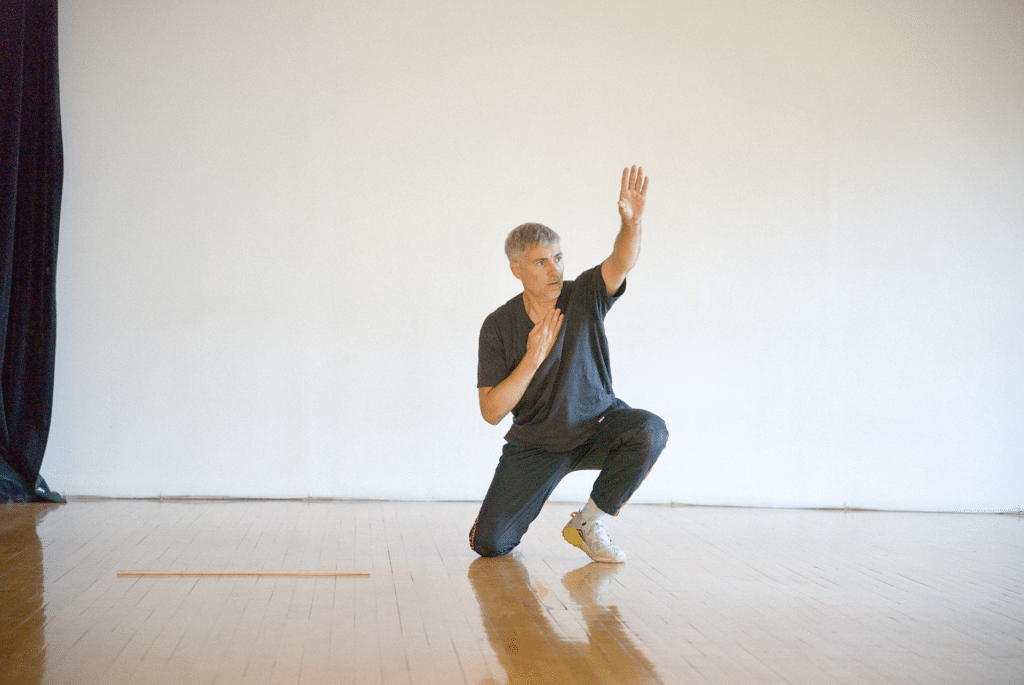
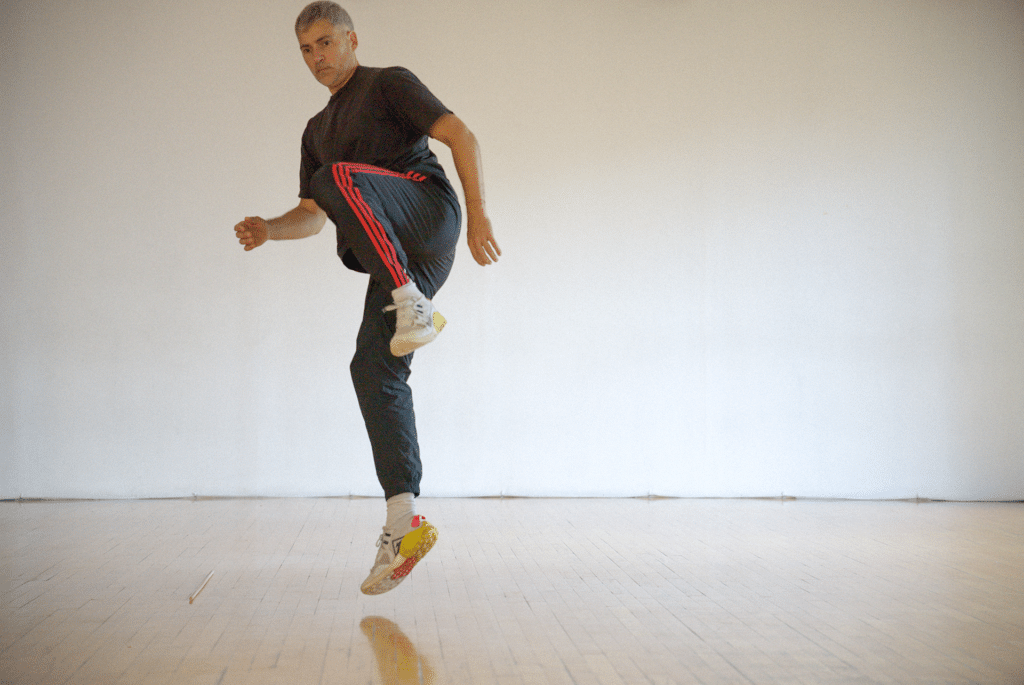
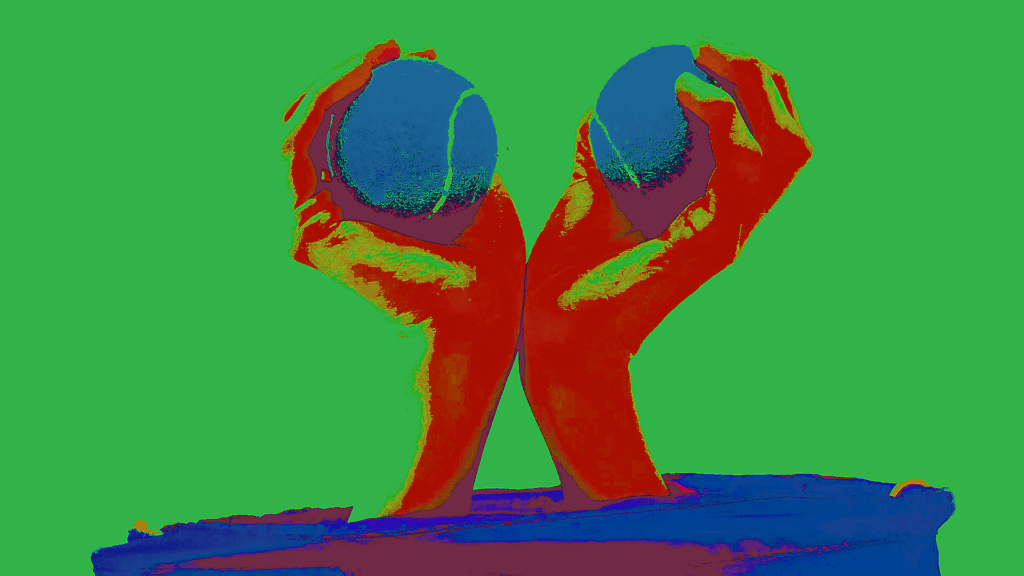
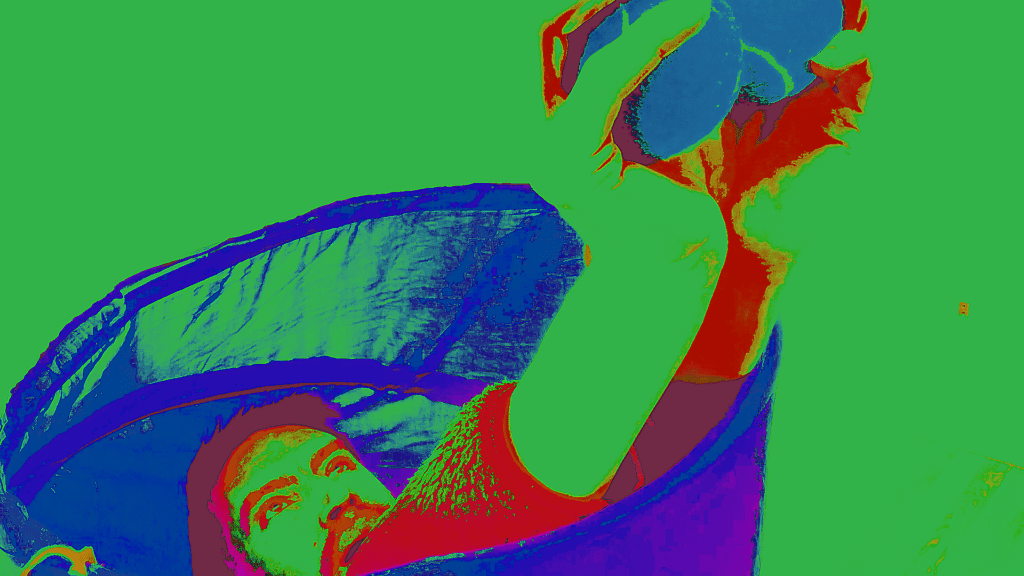
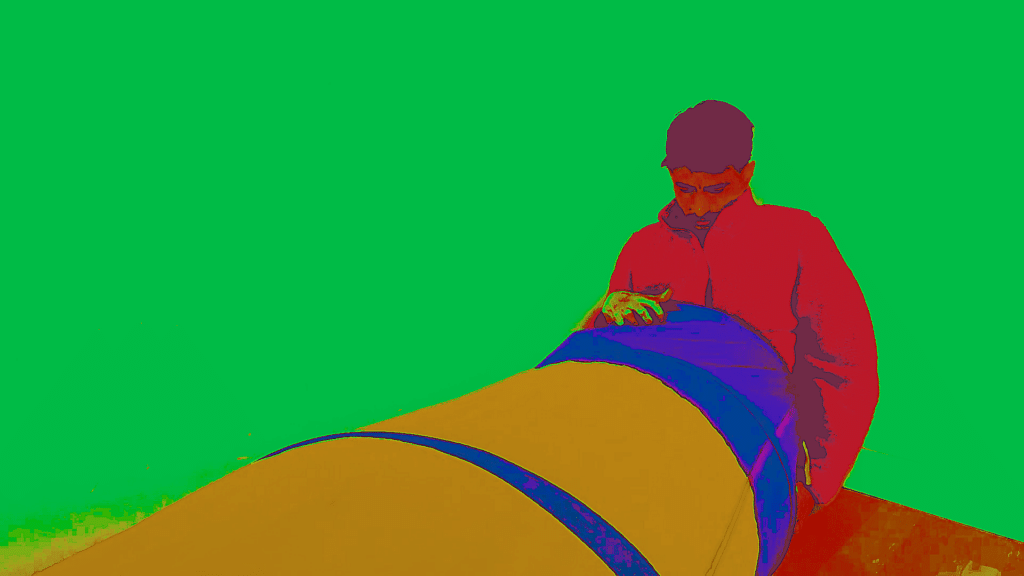
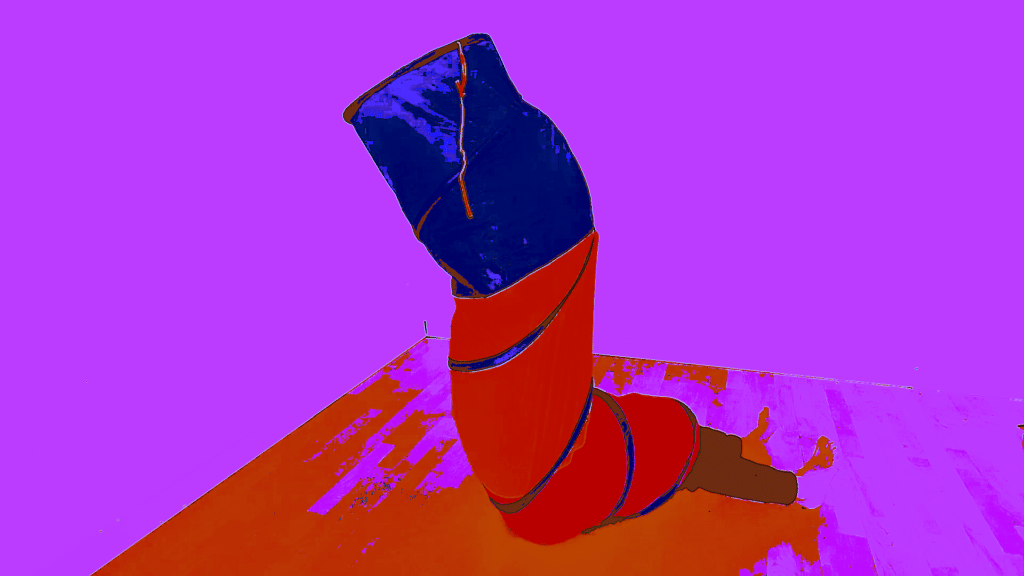
El sentir de las superficies tells a personal and speculative story in the style of queer cosmological science-fiction about alternative modes of perception of the architectural environments that act upon our bodies. Through everyday actions, dance and installation, this solo suggests that desire is produced beyond the body. The architecture and the objects that surround us propel our actions. But the link between Diego’s interaction with his environment and the words he speaks remains elusive. This gap sharpens our gaze, revealing a relational atmospheric aura that detaches itself from objects and always on the verge of disappearing.


With the support of Canada Council for the Arts (Explore and Create)
Residencies Parbleux (2022), MAI (Montréal, arts interculturels) (2023), Usine C/Labos du 4e (2024), Studio 303 (2025)
Supporting partner Centre de Création O Vertigo
Thank you I would like to thank the close collaborators of El sentir for their sustained and dedicated insights over the years: Lilia Mestre, Sybille Müller, Nik Forrest, and Tiffanie Boffa. Ellen Fuery and Emile Pineault somersaulted in the last phases of the creative process to inject much-needed new energy; thank you, adventurers. María Kefirova was the first conspirator to lend an ear to the project back in 2021 and keeps lending her shoulder today from the luminescent beyond. Thank you, María; this piece is also you! I also want to thank many people that visited the studio and left an everlasting comment that shaped the imperceptible contours of the work: Erin Manning, Christopher Brunner, Alanna Thain, Mayra Morales, Sebastian Kann, François Bouvier, and Katy Ward. Finally, I would like to thank Berly Acosta for imagining a shared life, and my human-animal companions for their insatiable want to cheer me up: Cactus and Galao Lopez.
Diego Gil is an artist and philosopher exploring the life of aesthetic processes through the lens of process philosophy. Born in Buenos Aires, Diego lived and studied in Amsterdam (School for New Dance Development and DAS Choreography). After 10 years of producing and showing his choreographic work across Europe (Tanz Im August, Tanznacht, Rencontres chorégraphiques, Sommerszenne, ImpulsTanz, etc.), he moved to Montréal to obtain his PhD from Concordia University’s Interdisciplinary Humanities program. In Montréal, he has collaborated as a dramaturg and performer in the choreographic work of Maria Kefirova, Hanna Sybille Müller, Lília Mestre, Projet Alter Dogs, and Francois Bouvier. He has also worked intensively with the Sense Lab/3 Ecologies Project, a research-creation laboratory at the intersection of philosophy, art and activism, in the organization of aesthetic-political events.
Hanna Sybille Müller is a choreographer living in Tiohtiá:ke/Mooniyang/Montréal. Her focus is movement, language, and its interrelations. Sybille is fascinated by the body’s strange, magic and ordinary potencies. She practices between the boundaries of dance, performance, and installation. She is interested in collaboration across species, as in Polymorphic Microbe Bodies (with poet Erin Robinsong, OFFTA 2023), which engaged with microbial life. Her current project, The Choreographic Garden, learns from plants what it means to think, move, and be vegetal. Originally from Germany, she studied dance at the Rotterdamse Dansacademie and received a diploma in Media Studies from the Berlin University of the Arts in 2012.
Lília Mestre (she/her) is a Portuguese choreographer, dramaturge, and researcher. She is Assistant Professor in the Department of Contemporary Dance and co-director of the Performing Arts Research Cluster (LePARC) at the MILIEUX Institute for Arts, Culture and Technology, Concordia University, in Tiohtià:ke/Mooniyang/Montréal. Lília works with scores, intersubjective set-ups, and chance-induced processes as emancipatory artistic and pedagogical tools, documented in various publications. She is interested in forms of organisation created by and for artistic practice as alternative study processes for socio-political and ecological reflection. She holds a FRQSC grant for the research-creation Keep in Touch! Critical Embodiments for Possible Futures (2025–28).
Nik Forrest is an interdisciplinary artist based in Tio’tia:ke/Montréal. They are currently a PhD candidate in the Interdisciplinary Humanities program at Concordia University. Their sound, video and installation projects have been shown at festivals, galleries and museums across Canada and internationally, including the Joliette Art Museum (Québec, 2023), the Listening Biennale (Berlin, 2021), Oboro (Montréal, 2018), and Kunsthalle Mulhouse (France, 2019). They have also participated in artist’s residencies in Paris, Buenos Aires, Hamburg, Winnipeg, and Saskatoon. Nik’s recent projects explore sound and listening as non-binary relational fields.
Tiffanie Boffa is a lighting designer, scenographer, and performer. She works to create sensorial and visual atmospheres, informed by her background as a contemporary dancer. As a lighting designer, she collaborated with multiple artists in theatre, dance and the performing arts, like Gabrielle Lessard, Guillermina Kerwin, Jon Lachlan Stewart, Simon Renaud, Lauranne Faubert-Guay, Véronique Giasson, Marie Béland, 100 Lux, Sébastien Provencher, and the company We All Fall Down.
With El sentir de las superficies, I’m exploring performative ways to generate surface effects that are inseparable from the materiality of the environment. Blending storytelling, movement, performance and philosophy, I want to unstick vaporous and ephemeral surfaces from the materiality of objects in the room so they can be sensed by spectators. For example, I extend my left arm to plug in an extension cord while I say a sentence from a queer cosmological story. In the small gap between gesture and narrative, a fleeting texture appears, something vague and on the verge of vanishing. The juxtaposition of text with a seemingly unrelated action performed upon an object casts said object in a new light, revealing an atmospheric relational aura that wouldn’t be perceived otherwise. I hope these vague presences can gently shift our attention away from the human body as the central agent of the world, allowing an ecology of interstitial forces to take shape. I hope these vague presences are considered the actual performers of a play made out of their interstitial, almost imperceptible connections.
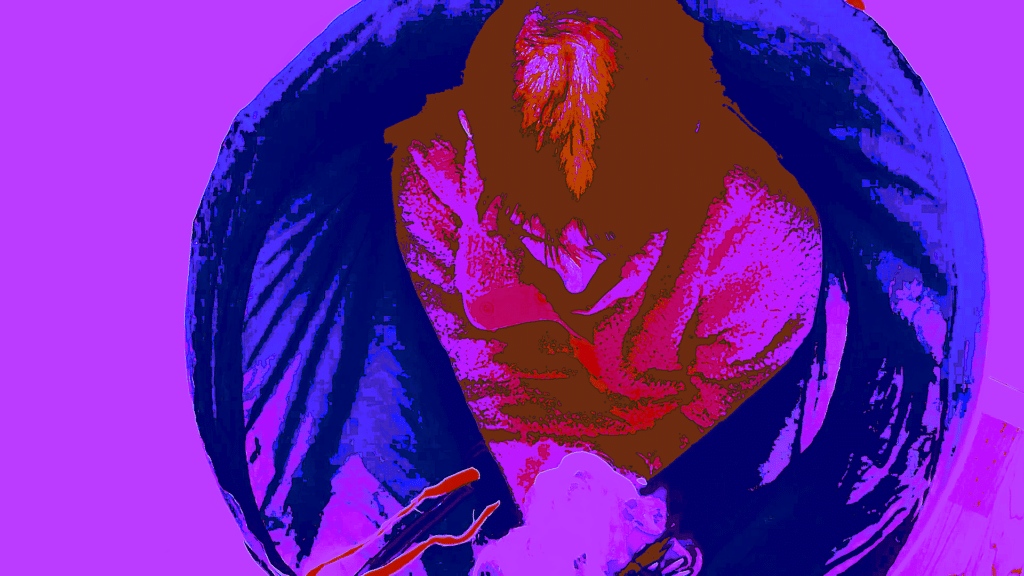
Peng Hsu
Cucumbers, the Melancholy of a Turtle, and a Girl Otaku’s Romance
“So it’s true,” the village chief thought, “Cucumbers are falling from the sky.”
By now, cucumbers had already knocked down several middle-school students, five of them from the advanced math-and-science class. There was also an elementary school student who, while tilting his head to look at birds, had a cucumber plunge straight into his mouth. He had not spoken since. On the notebook he now used to communicate with others, the child wrote: “One opens his mouth, thus, disaster.” The local officials were heartbroken. Cucumbers, after all, force people to mature too early.
But the cucumber attacks were not the most urgent problem. The most urgent problem was that my uncle was still crying in the bathroom. I was in pain. I was in pain because I couldn’t shit freely in my own home. I was in pain because I had to hold it in.
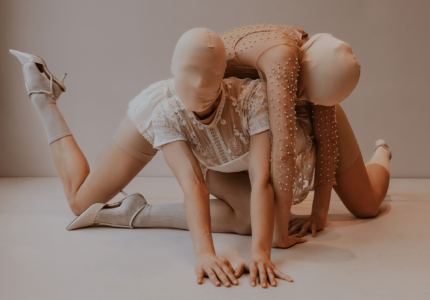
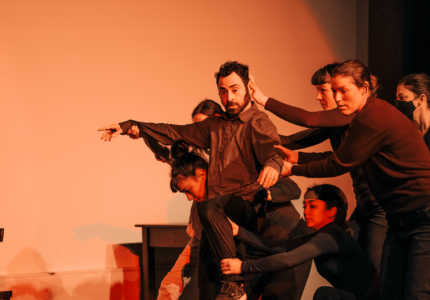
This theatrical trio is set in Taiwan and features an endangered turtle from Ottawa.


Thank you Our exploration in Montréal of the Taiwanese cucumber and of the BBR acting method it carries has been made possible by the generous support and sponsorship of many individuals and organizations. We would like to express our sincere gratitude to Tangente, Art Volt, Concordia University’s Acts of Listening Lab, Concordia University’s LePARC Performing Arts Research Cluster and Performance Lab, Erin Manning, Denise Rogers Valenzuela, 張棉棉 (Mienmien Chang), Alexandre Adam-Goyette, Charles Gao, VK Preston, Lilia Mestre, Malte Leander, and Rena Eyamie.
Peng Hsu is a Taiwan- and Montréal-based theatre director, playwright, actor, and researcher. Her works explore excess, bad taste, and camp and queer humour from a Taiwanese perspective. Since 2020, Peng has been developing a playwriting style, a directing method, and an acting aesthetics centred on BBR. BBR, short for broke broke recitation, is Peng’s translation of the Mandarin term 碎碎唸 (siu siu nian). It is a phrase used in Taiwan to describe how women chatter incessantly about banal trivialities. Peng sees BBR as a technique of queer narration that traces queer experience by hoarding insignificance, thus compulsively looping the aside and the too-much. Peng’s directing and playwriting work of BBR, Great-Grand Rat-Po-Tai (So Old) Is Sleeping Next To A Landscape Painting, Diligently & Stingily Snoring—— But There Is No Landscape Painting! (White Carrot, Rat Teeth, Her Child, (And Her Child’s Child.)), received Taiwan’s most prestigious Taishin Performing Arts Award in 2025. Peng comes to Montréal in 2023 to pursue her PhD in Interdisciplinary Humanities at Concordia University.
Heather Anderson is a Montréal-based dancer, writer, and emerging dance dramaturg. She holds a BFA in Contemporary Dance from Concordia University and was a 2022 Nominated Undergraduate Fellow with LePARC (Performance Arts Research Cluster) at the Milieux Institute for Arts, Culture, and Technology. Heather has worked under the mentorship of Lília Mestre on Meeting through Materialities, Bodies, and Words (2023–2024) and continues this collaboration through Keep in Touch!, to be presented at La Chapelle Scènes Contemporaines in the fall of 2026. She also works under the mentorship of Angélique Willkie, whose guidance informs her engagement with dramaturgy and embodied relational practice. Her work explores the (mis)translation between writing and dance, approaching language and movement as reciprocal sites of inquiry. She works through dramaturgy, performance and writing to support critical somatic investigation that cultivates deeper, wider and more complex relationalities.
Esteban Donoso is a researcher-artist from Quito, Ecuador. He recently completed his PhD in Theatre and Performance Studies at York University in Toronto. His work focuses on dance and performance archiving and transmissions, oral histories and practice-based methodologies.
Tiffanie Boffa is a lighting designer, scenographer, and performer. She works to create sensorial and visual atmospheres, informed by her background as a contemporary dancer. As a lighting designer, she collaborated with multiple artists in theatre, dance and the performing arts, like Gabrielle Lessard, Guillermina Kerwin, Jon Lachlan Stewart, Simon Renaud, Lauranne Faubert-Guay, Véronique Giasson, Marie Béland, 100 Lux, Sébastien Provencher, and the company We All Fall Down.
Drawing on a background in dance and fashion design, 陳必綺 Hikky Chen’s practice explores the relationship between the body and the visual. She approaches the body as an abstract form of sculpture, while the visual becomes an extension of the body’s inner subconscious. Through her work, she explores bodily languages shaped by identity and cultural history, as well as the social symbols embedded in clothing and objects. She graduated from the Department of Dance of the National Taiwan University of Arts in 2003, and graduated in Fashion Design from MODE GAKUEN in Japan in 2007.
Since 2020, BBR (broke broke recitation) has been at the core of both my creative and research practice. In Taiwan, a BBR person, with her monotone loquacity, is often mocked as a mosquito. This image captures both the flatness of the BBR voice and the excessive, minute accumulation of BBR speech. Through collaboration with Esteban, a brilliant mover and performer, I want to explore how the body can act out the flatness of BBR sound and the inefficiency of BBR language. At the same time, I am curious about what kinds of movement can coexist with BBR’s excess of language, and what styles of movement, in fact, demand a more enclosed, speechless space.
Production support for Heather Anderson, dramaturg for Peng Hsu, provided by