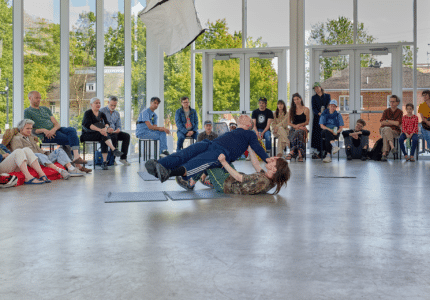
Danses Buissonnières 2026
Johanna Simon + Yanik Savoie + Dona-Bella Kassab & Shanyça Elie-Leconte + Desirée Keresztes James + Ekspresyon
ÉDIFICE WILDER | Espace Vert
September 26, 2026 - 7pm
September 27, 2026 - 4pm
September 28-30, 2026 - 7pm
Discussion with the artists on September 28
7 young artists take their first professional steps on stage, but go down different paths. Faithful to tradition, the Danses Buissonnières jury put together an eclectic evening where perspectives multiply and dance freely expresses itself. Haitian migration, the purging of oppressive experiences, artificial intelligence, the deconstruction of gender and the social conditioning of our gestures alternately fuel choreographic inspiration. These 5 works were selected among 39 by a jury composed of artists Sarah Elola, Nasim Lootij, Lucy M. May, Mukoma-K. J. Style Nshinga, and Charo Foo Tai Wei. The talent of these emerging dancemakers promises a powerful evening.
All the projects were supported by the Conseil des arts de Montréal and the Caisse Desjardins de la Culture as part of our “Donnez un coup de pouce, déplacez une montagne!” crowdfunding project on the La Ruche platform, a partner of Tangente.
Danses Buissonnières artists benefited from residencies offered by Tangente.
The order of the pieces is subject to change.
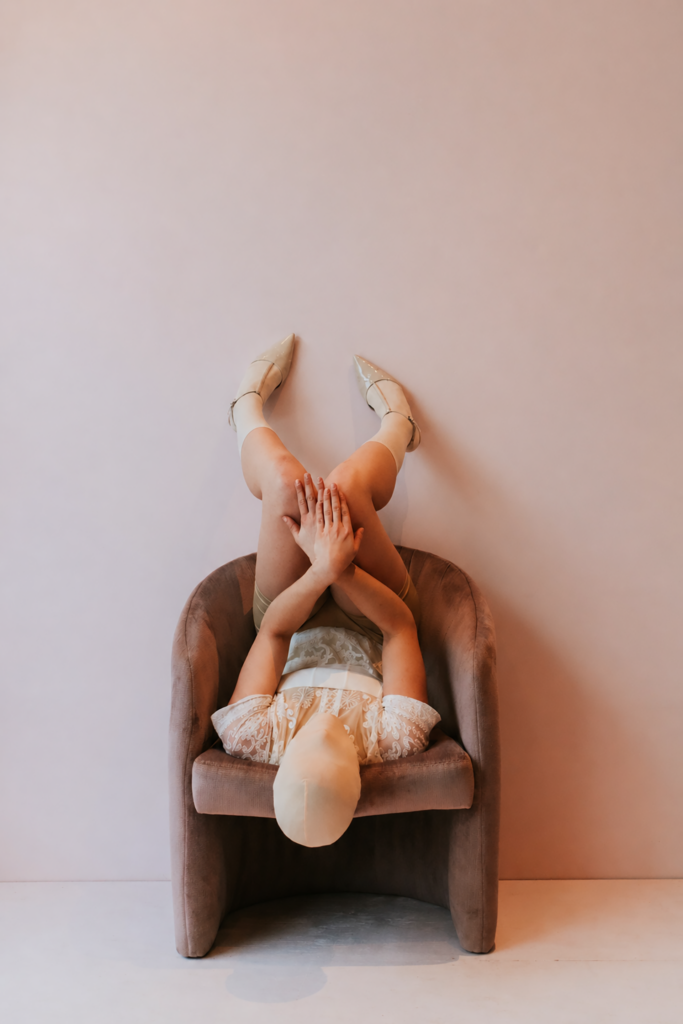
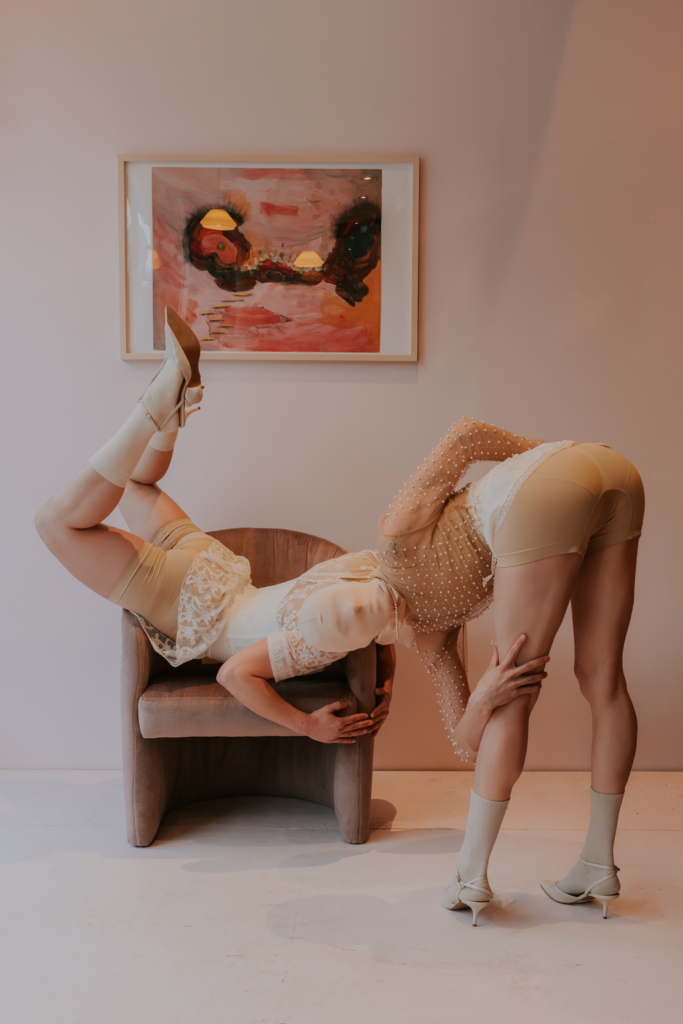

Johanna Simon
Minuit portant
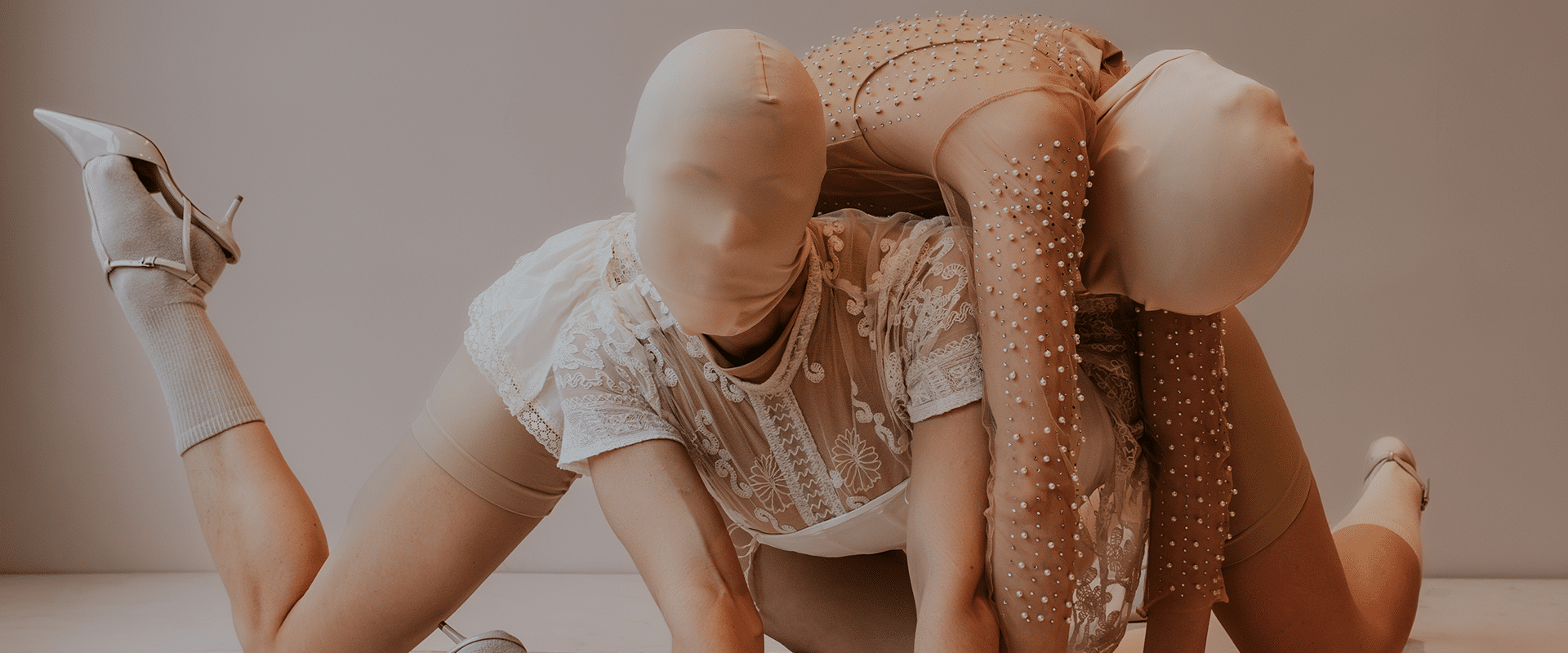
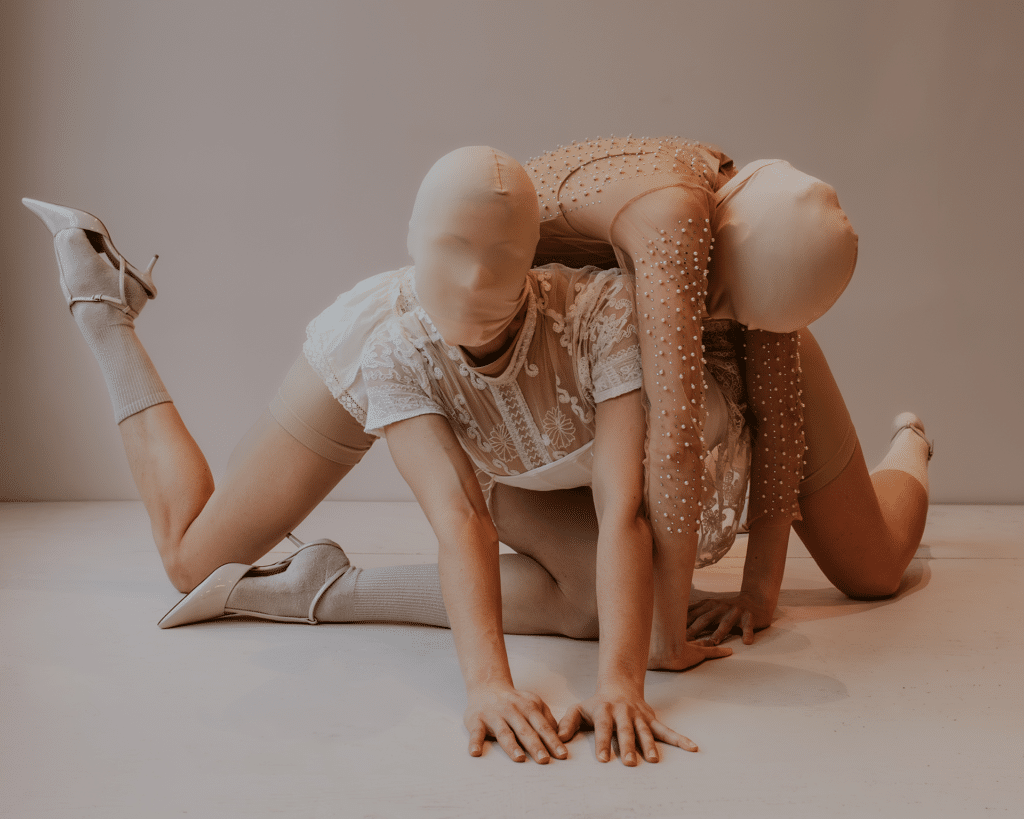
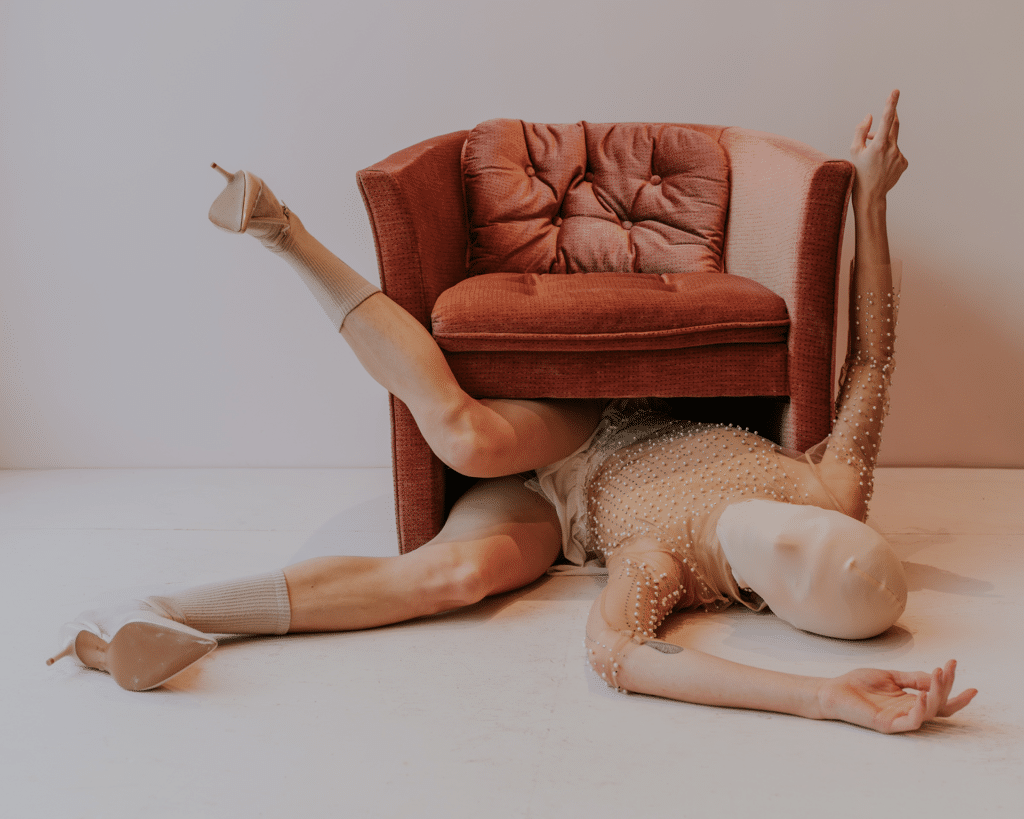
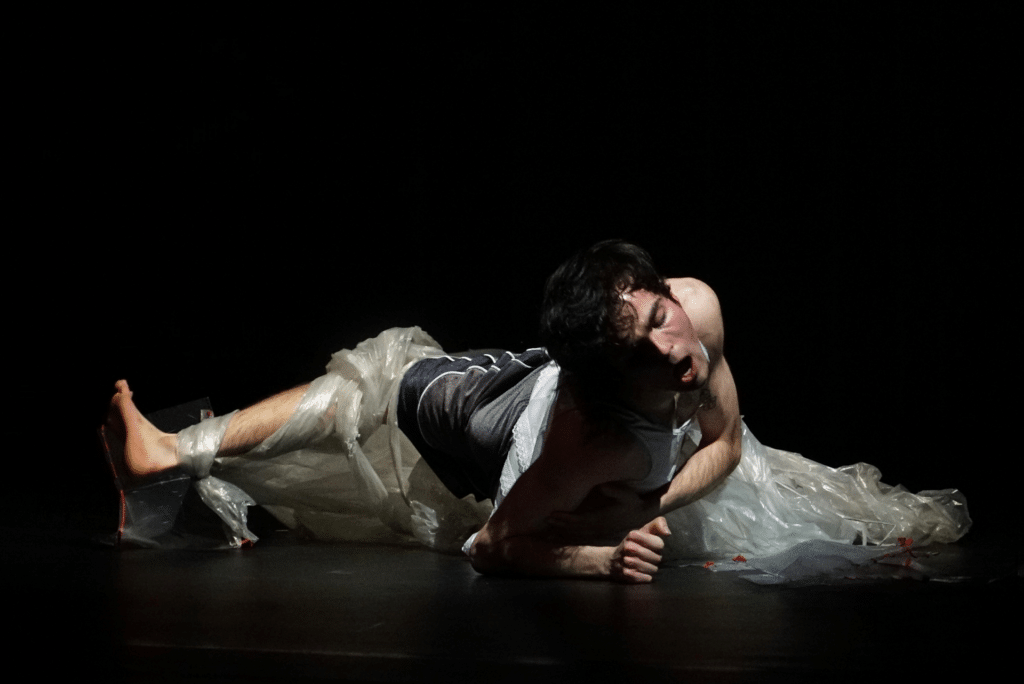
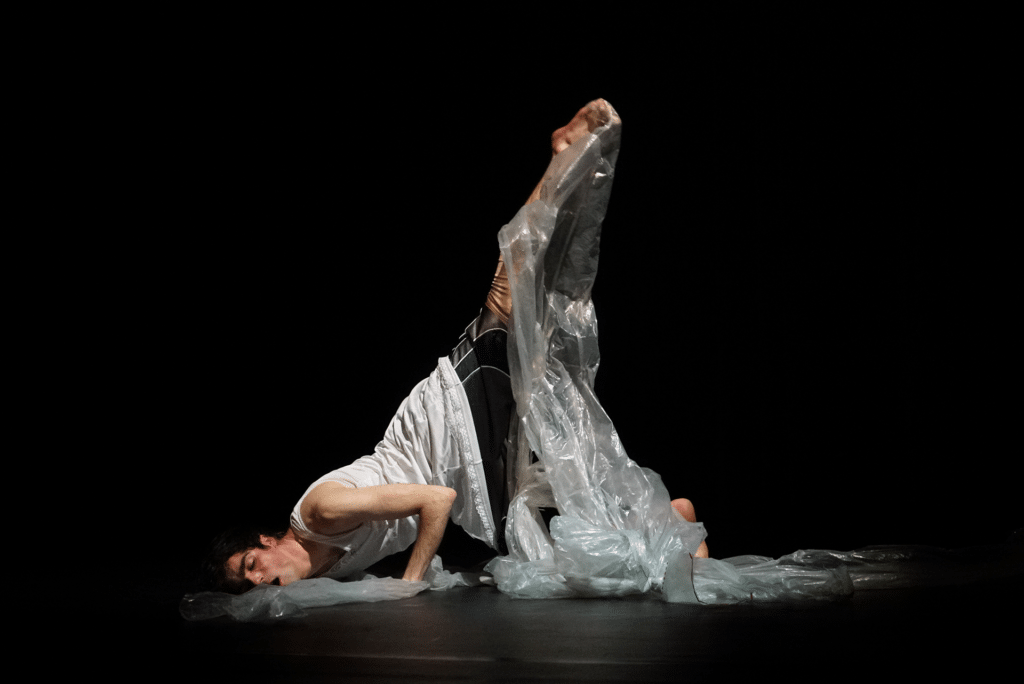
To whom do our gestures really belong? Minuit portant begins there, with movements learned early on: being accommodating, smiling at the right moment, holding back. Gestures that seem trivial, yet are deeply ingrained. Blending contemporary dance and physical theatre, the piece unfolds between control and excess, carried by a soundscape that shifts from classical music to electro beats. In a setting inspired by the 18th century – somewhere between a salon and a window display – furniture and costumes become fellow performers. Two women move from object to living presence, reenacting what has been passed down to them. Who is speaking when the body moves? Is it a choice, or a repetition? So they search in the gaps, in the shifts, perhaps for a fragile space to inhabit without performing.


Residencies José Navas/Compagnie Flak, Tangente
At the intersection of intuition and research, Johanna Simon approaches movement as a space where the body becomes material, language, and a site of transformation. Based in Tiohtià:ke (Montréal), she works as a choreographer, performer, and teacher. She holds a university degree in Physical Education with a specialization in paragliding (STAPS, France, 2016) and a Bachelor’s degree in Artistic Practices (UQAM, 2021). Her practice focuses on gestures — transmitted or chosen — and their meanings. With a background in sports, she moved toward contemporary dance and later physical theatre, where she explores the redirection of performance-driven logics into choreographic forms that combine physicality, humour, and absurdity. In 2023, she founded the artist collective APARTÉ & Co, through which she develops her choreographic projects, including La Ménagerie, presented at the Ottawa Fringe Festival. Her work offers a critical and embodied perspective on our human condition.
Constantly searching for new ways to expand her practice, Sarah Roy has studied at the DEC in Dance at Collège Montmorency, in the Contemporary Dance Program at The School of Dance in Ottawa and the Big Bang program in Montréal, where she has had the opportunity to transpose her daily obsession into her own choreographic works. By immersing herself in the universe of different choreographers, she has discovered a passion for theatricality, improvisation, and contact work. Driven by her curiosity about the world around her, Sarah’s art is inspired by photography, the strange, the beautiful, and the simple.
Originally from Lac-Saint-Jean, William-Nicolas Tanguay is a contemporary dance artist and interdisciplinary creator currently based in Montréal. His practice lies at the intersection of choreographic movement, free gesture and performative systems, where he explores how the body becomes a vehicle of meaning within systems shaped by aesthetic rules, cultural context and performative environments that influence the spectator’s gaze. With a background in performing arts and anthropology, he investigates the perception of gesture, the codes that structure artistic practices, and the relationships between dance, performative action, theatricality, and symbolic systems. He has collaborated on various projects as a choreographer, performer, dramaturg, and artistic director.
Hannah Covey is a Montréal-based photographer whose practice spans portraiture, fashion, and conceptual imagery. Her work explores movement, identity and atmosphere, often drawing from collaborations with dancers, performers, and creative artists. With over eight years of experience, she has photographed a range of subjects, from intimate portraits to performance-driven projects. Hannah is currently completing her BFA in Photography at Concordia University, where she continues to refine her conceptual and technical approach. She values collaboration and storytelling, creating images that feel expressive, intentional and grounded in a strong sense of visual sensitivity and connection.
Alexander Ellison graduated from Canada’s National Ballet School in 2017 under the direction of Mavis Staines. He joined Cas Public that same year. After five years performing exclusively in works by Hélène Blackburn, both in Québec and internationally, he began a freelance dance career in 2023 while maintaining a strong connection with Cas Public. Over the years, he has had the opportunity to dance for Céline Dion, collaborate in the studio with Édouard Lock, and create with Helen Simard. More recently, he performed choreography by Béatrice Larouche in a short film by visual artist Jonathan Tremblay. He has also taken part in works by Aszure Barton, John Neumeier, George Balanchine, Cai Glover, Adrian Batt, and Pauline Berndsen Gervais. Recently, he assisted Hélène Blackburn in her creation for Les Grands Ballets Canadiens. Since 2020, Alexander has also been creating the company’s official dancer portraits.
We approached the creation of Minuit portant as a space of exploration between body, memory, and constraint. Through improvisation, we revisited simple gestures — sitting, holding oneself, moving, ways of looking — slowing them down, repeating them and pushing them toward the absurd to reveal what they carry within.
Very quickly, one question guided us: which gestures truly belong to us and which ones do we keep reenacting without even realizing it?
We nourished our research with imagery from the 18th century — codified postures, restrictive garments — placing them in dialogue with our own experiences and the contemporary expectations imposed on women’s bodies. Costumes and furniture became true partners in the process, imposing their own rules.
Between choreographic writing and theatrical exploration, the piece developed through a series of tableaux, leaving space for amplification, repetition, and shifts in perspective. Gradually, a shared language emerged: bodies oscillating between conformity and overflow, between inherited forms and attempts at reclaiming them.
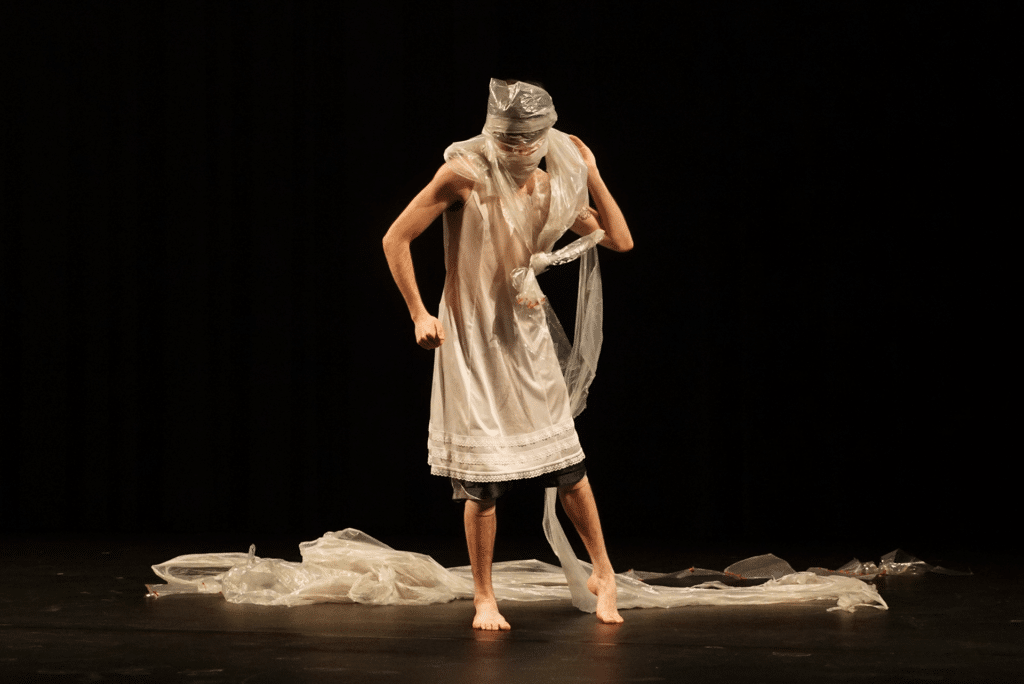
Yanik Savoie
Mue de peau
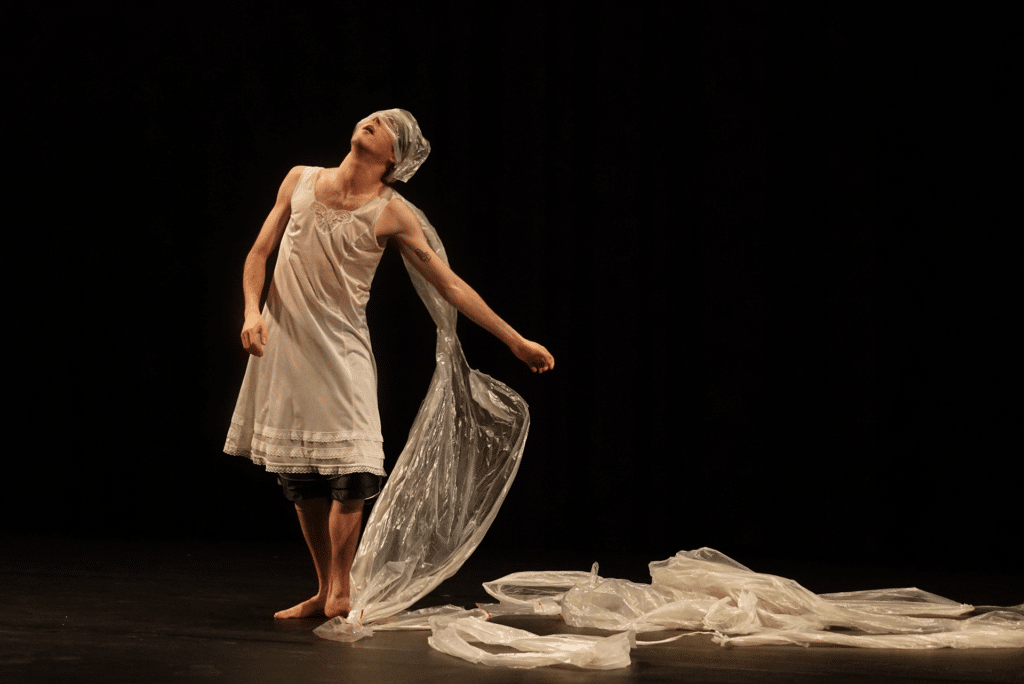
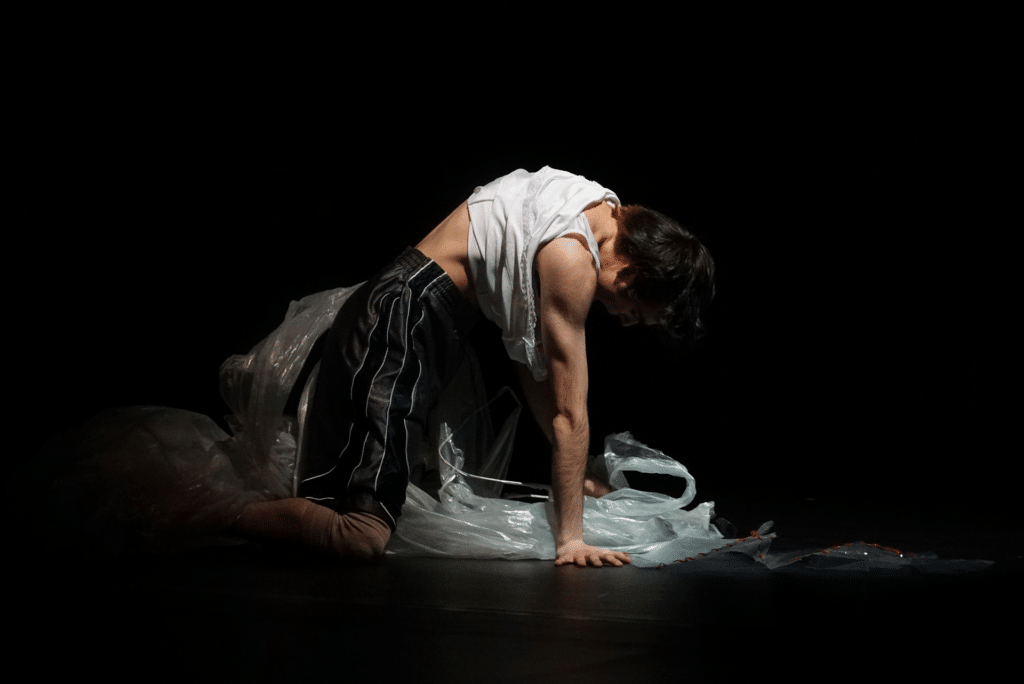
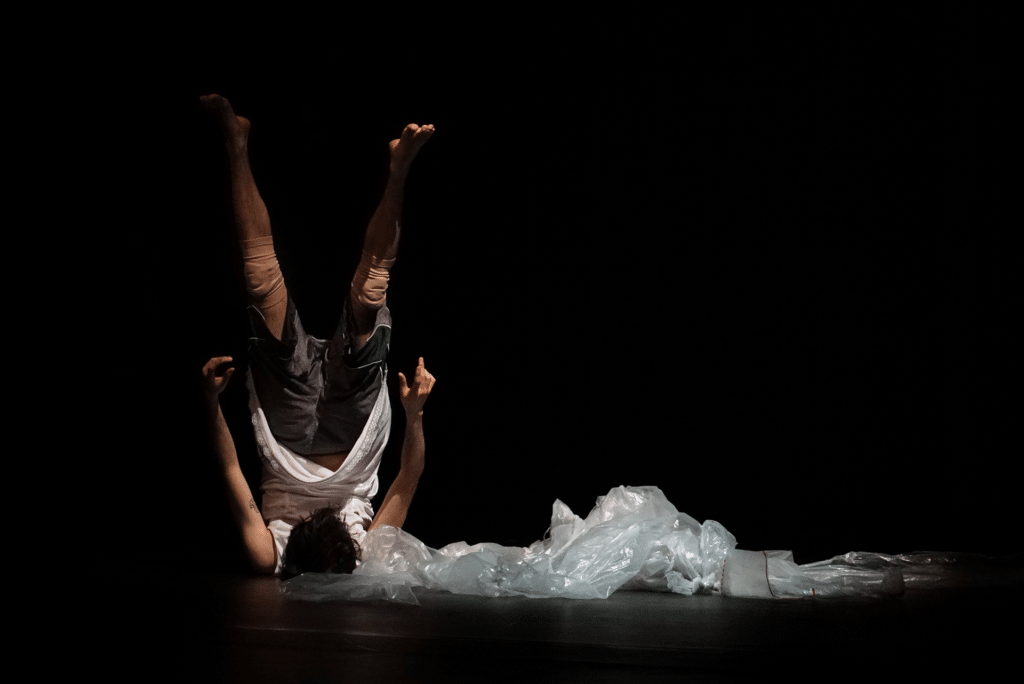
Growing pains and the shedding of flesh bring this solo to life. As classical music echoes, a deconstruction of social conditioning of gendered and dancing bodies unravels through the process of becoming. On a stage covered in a track of skin made of plastic, a performer wearing a white dress unveils curiosities of gender expression and queerness from early childhood. Through the use of the psychological and physical effects that socialization imposes on its subjects – achieving perfection and verticality, conforming to gender roles, smiling all the while – emerges a poetics of disturbance in which dance becomes an act of reappropriation and freedom.


Music recorded, produced and released to the public by The Musopen Kickstarter Project (www.classicals.de)
Residencies José Navas/Compagnie Flak, Tangente
Yanik Savoie (he/him) is an Acadian artist based in Tiohtià:ke/Montréal. As a choreographer, performer and teacher in contemporary dance, he seeks to be part of a creative process and travel with his art. As a student in contemporary dance at Concordia University, he uses video editing and drawing as methodologies in his artistic practice, serving as catalysts for worldbuilding. He performed in Vir Andres Hera’s At the Limit of the Otherworldly Limit of the World, accompanied by Kama La Mackerel, at Fonderie Darling in 2025. He is fascinated by beauty as disgust, joy, disturbance, sexuality, gender, and the exhaustion of the human body.
Mia Catherine Pereira is a Portuguese–Canadian dancer, choreographer and writer based in Montréal. She is drawn to dance as a tool for storytelling and empathy-building, and gravitates toward theatricality, excess, and camp. Her choreographic interests lie in the oscillation between sincerity and spectacle. Her training is rooted in classical ballet through the Royal Academy of Dance, alongside jazz, tap and modern training with the Imperial Society of Teachers of Dance. Mia Catherine hopes to continue working with artists who are excited by process, unafraid of discipline, and committed to movement practices that prioritize rigor, care, and fulfillment.
Henry Richa is an intermedia artist based in Tiohtià:ke. Henry’s praxis positions the body through a flux of technologies (video, sculpture, sound, and movement) to create sensory experiences. Consumed by popular culture, he utilizes it as a language to address current politics. His work puts community at the forefront of the current genocide-ecocide crisis as a last refuge for survival. He carries out research that positions the rave as an active space for collective consciousness in the pursuit of revolution. Henry shapes his creations in relation to their intended recipients, questioning the accessibility of art within colonial structures.
I consider choreography a political tool in my research on gender identity, representation, and the conditioning of dancing bodies. This exploration leads me to the figure of the monstrous body, which allows me to highlight an alternative beauty, a repulsive beauty. I use my own body as a medium to reveal the psychological, physical and aesthetic effects that societal conditioning imposes on its subjects.
I use stereotypical constructions of codified gender as well as societal expectations in queer acts and expressions to transform these constraints into choreographic material as a form of resistance.
By looking at my childhood through VHS tapes my parents took from my birth to my first birthday party, I treat my childhood memories as research material, asking: how can we use childhood memories as political tools to deconstruct gendered bodies in society?
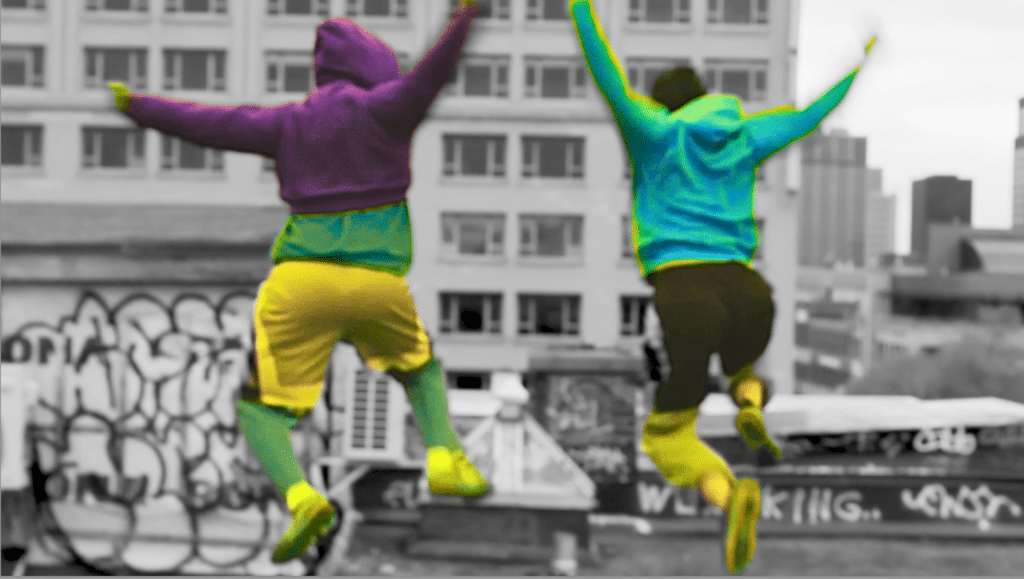
Dona-Bella Kassab & Shanyça Elie-Leconte
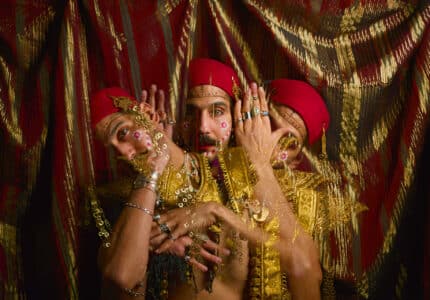
Maktoub : pas de bliss sans diss
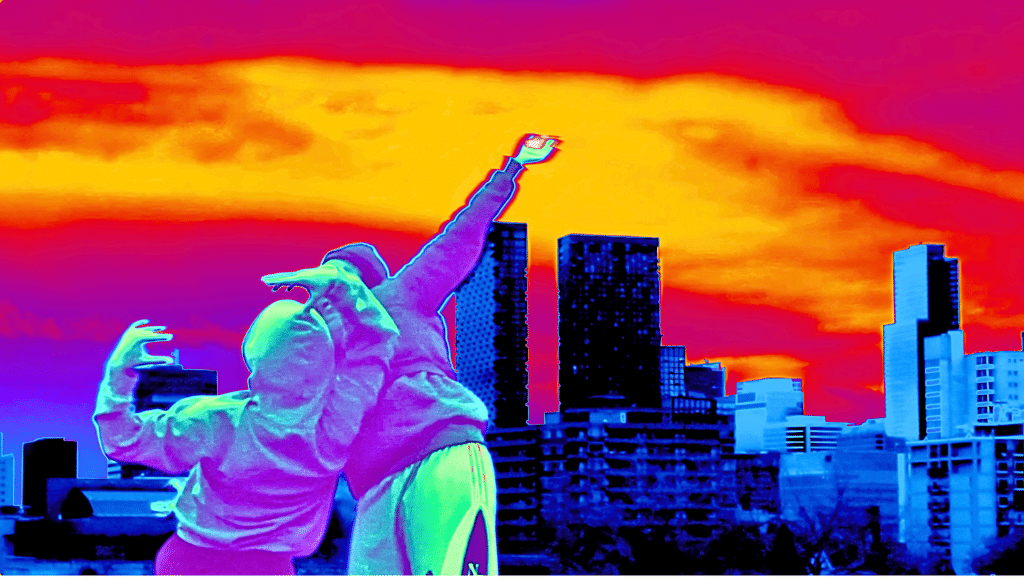
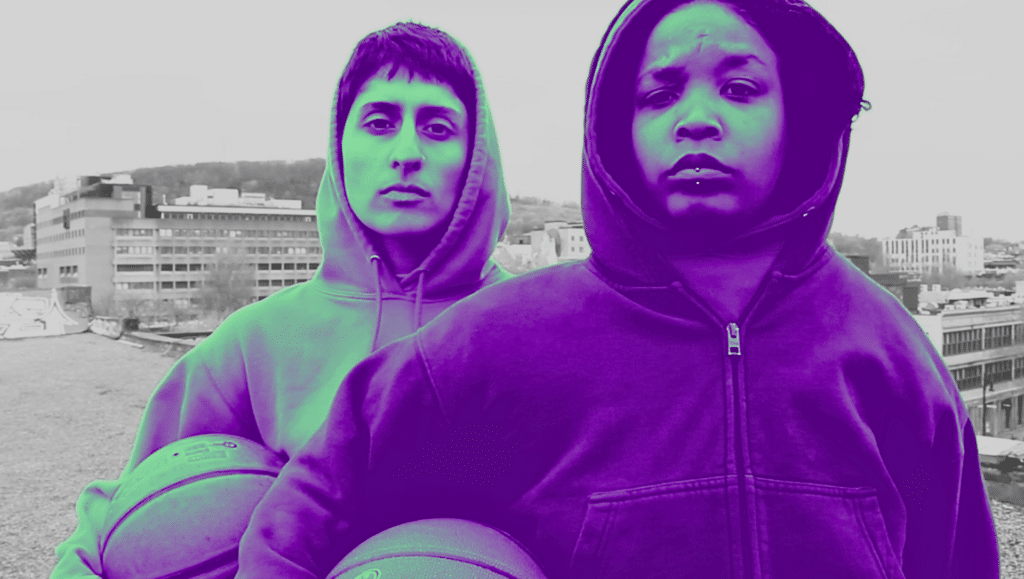
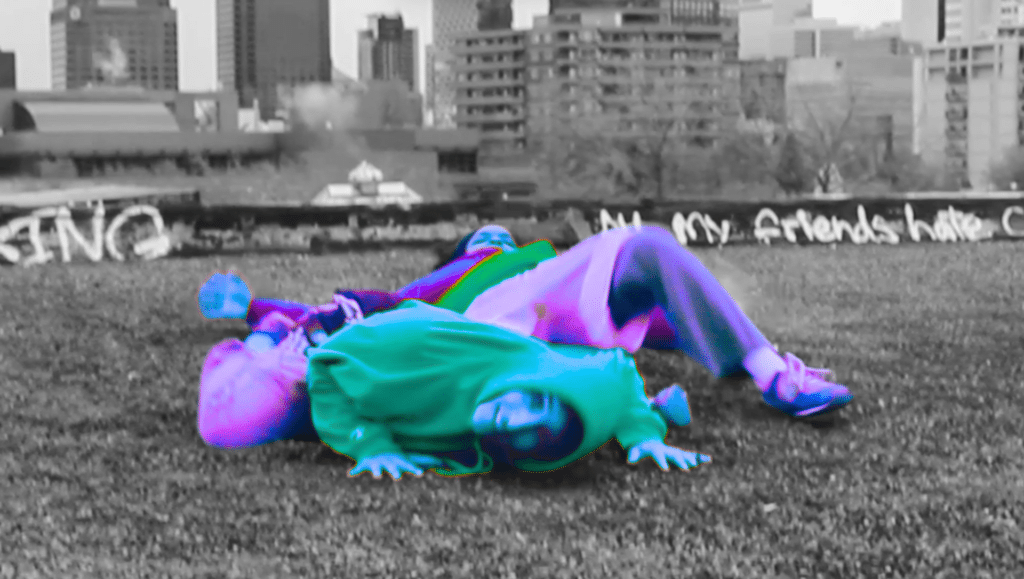
What do two souls, their rage tamed, look like as they seek to heal their hearts together? With raw authenticity, Doni invites Shany to use choreography to navigate the pain that has shaped who they are today. The duo embarks on a ritual of purgation where confrontation and communion go hand in hand to channel bitterness, work through the grief of resentment and unleash a self-exaltation resolutely turned towards the future. Together, they revive buried memories to better free themselves from them. So that diss becomes bliss. Maktoub means “it was written.” Through this choreographic ritual, where a surreal past and absurd impulses collide, will they manage to make peace with their destiny?


Residencies José Navas/Compagnie Flak, Tangente
Dona-Bella Kassab, born in Gatineau and originally from the SWANA region, is now based in Tio’tia:ke/Montréal. They perform through dance and theatre with a unique stage presence. In 2020, they made their debut as a creator in the performing arts and installation art. Since then, they have presented their work at various festivals in Québec, on underground stages, and in situ, notably through their monthly series Performance à Domicile. After studying visual and media arts, they continued their academic journey at École supérieure de théâtre and in Concordia’s Contemporary Dance program. However, their greatest learning has taken place outside institutional circles. They traverse the disciplines of the performing arts with an approach that champions innovation in aesthetics, methods, and imagination. Doni is passionate about several distinct dance forms, particularly punking. As a multidisciplinary performer, their approach is distinguished by their activist background and their lucid and empathetic view of the world.
Shanyça Elie-Leconte is a multidisciplinary artist based in Montréal. She is involved in dance, rap, and music. At the age of 13, she took up mambo (New York-style salsa), which was her first dance style. The confidence she exuded whilst dancing inspired her to learn more about this culture. She continued to hone her skills until she mastered multiple styles of urban dance, such as old-school hip hop, breakdancing, popping, krump, waacking, and videostyle at the UEZ school in Montréal. Later, she joined the first cohort of the Big Bang contemporary dance school, founded by Stéphanie Decourteille. Shanyça honed her artistic signature through freestyle, storytelling and the world of battles, both in dance and rap. For over a decade, the artist has drawn inspiration from the experiences of Montréal’s disadvantaged neighbourhoods, making them her constant source of inspiration. She sincerely believes that art uplifts future generations and has the power to touch every heart.
Born out of the serendipitous meeting between Doni and Shany, Maktoub’s creative process brings together two paths guided by a shared quest for an oasis for the heart. To achieve this, the duo draws on their diverse, multicultural and complementary forms of physical expression. Through an intuitive choreographic montage based on re-enactment, they delve into disillusioning memories to breathe new meaning into them. Memories are transformed into movement through the aesthetic lens of basketball, a point of anchor and an unusual place of connection for the two performers. Together, they enact a ritual aimed at breaking free from fixed interpretations of themselves and moving towards bodily agency. Transforming anger into wild wisdom? That, at least, is the aim of this dance, which explores movement across three dimensions: the real, the surreal, and the poetic.


Desirée Keresztes James
'making life easier'
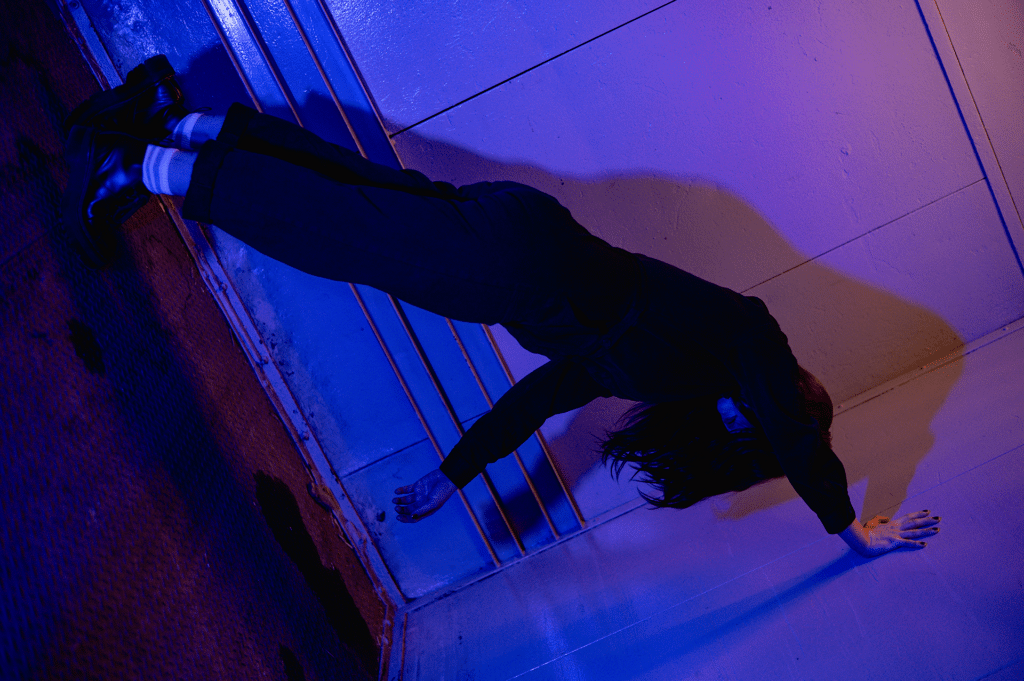
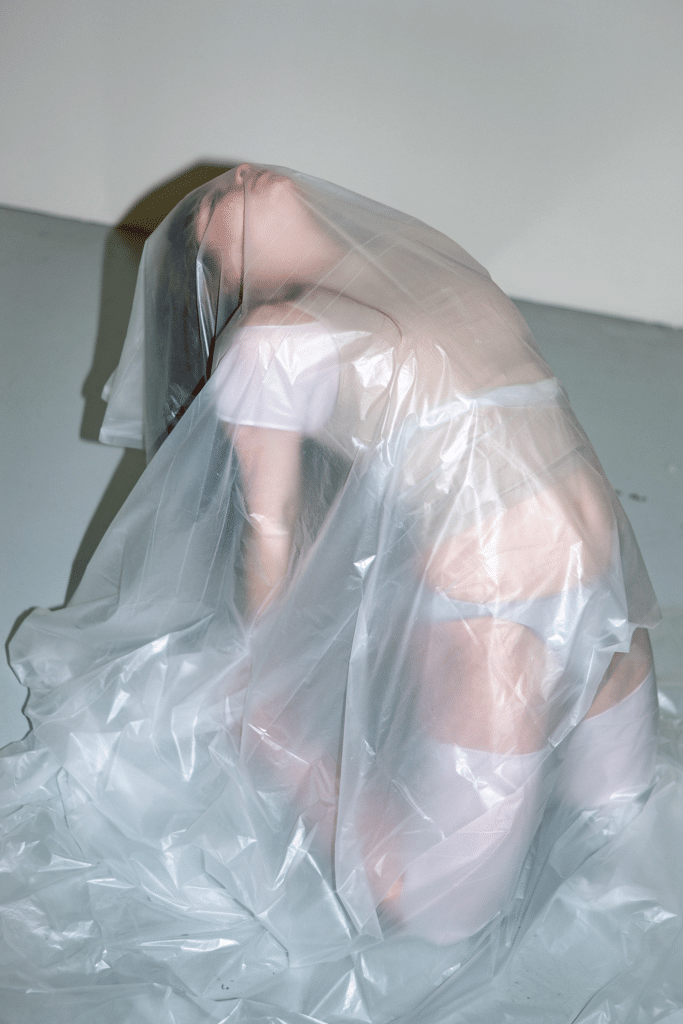
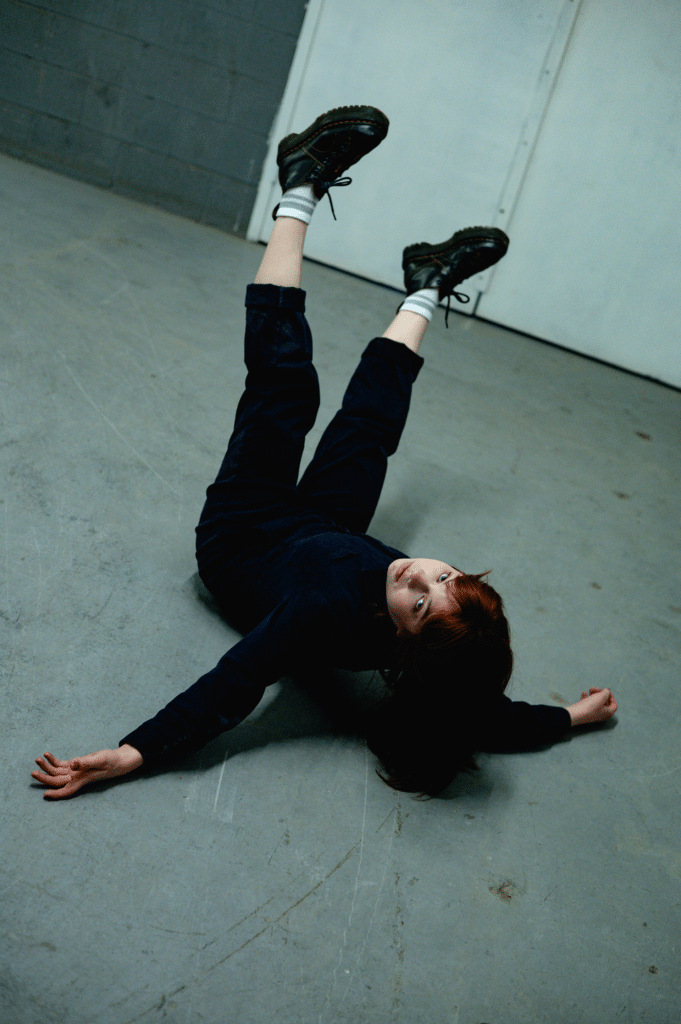
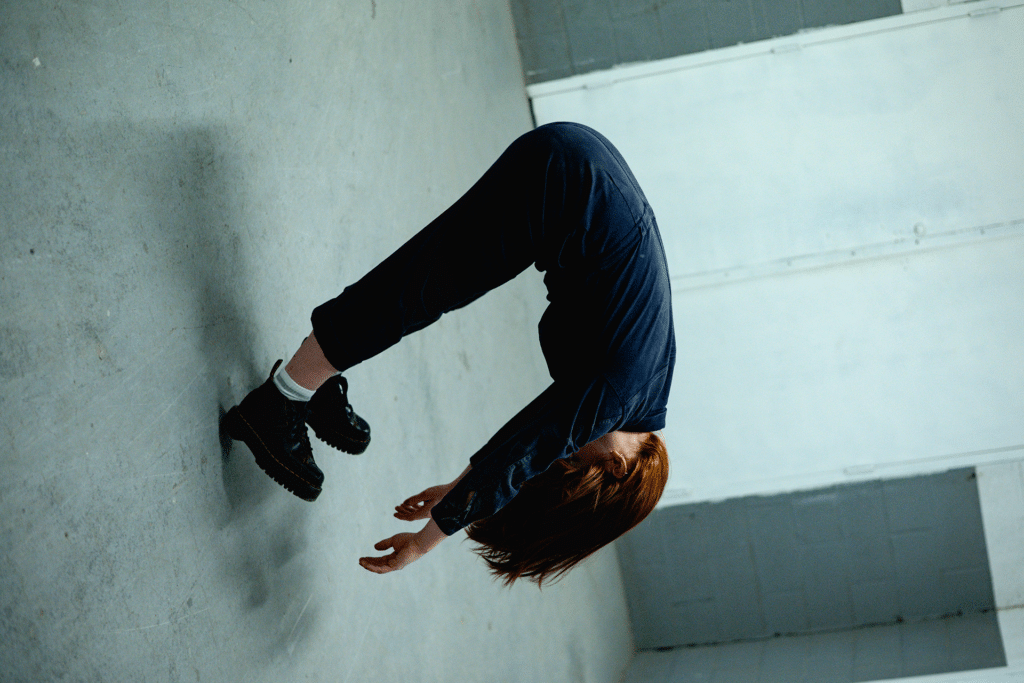
‘making life easier’ explores what it means to live with artificial intelligence. Through fantasy, this solo replicates the feeling of having your information exploited as a tool to gain your favor in a way that portrays friendliness and invokes trust. The performer sheds layers as the piece devolves to reveal irregularities and inconsistencies in the predictable, playing with our expectations. ‘making life easier’ deals with themes of deceit and the indistinct, and asks: how do our behaviours speak to our humanity and how do we distinguish human experience from emulation?


Residencies José Navas/Compagnie Flak, Tangente
Desirée Keresztes James (she/they) is an emerging contemporary dance artist based in Tio’tià:ke/Montréal since 2023, whose artistic practice explores queering the gaze and investigating the presentation of camp. They hold a Bachelor of Fine Arts in Contemporary Dance from Simon Fraser University and have studied at Trinity Laban Conservatoire of Music and Dance and the Big Bang program. As a performer they have had the opportunity to work with Alexandra Caprara, Rob Kitsos, and Emmalena Fredrikkson with work being presented nationally and internationally. She premiered as a choreographer at NextFest 2025 with a solo work entitled Disrupting Synth Clarity, and has also recently completed a month-long residency through Áras Éanna Arts Centre in Inis Oírr, Ireland, as part of a creative research and collaboration. By blending high and low art, she aims to create bold performances that celebrate authenticity and embrace difference, inviting audiences to engage with alternative perspectives.
Natasha Dennison (she/they) was born in White Rock, BC, on the unceded homelands of the Semiahmoo First Nation and the broader territory of the Coast Salish Peoples. She was raised on homelands of the Algonquin, Kinakwii First Nations, known as North Augusta, Ontario. She has studied visual arts at OCAD University in Toronto and recently graduated Simon Fraser University School for Contemporary Arts in Vancouver. Natasha places her energy towards the exploration of eccentricities within sound, movement, and emotional complexity and ferocity. Often touching on themes of camp, oceanography and plant biology, memory, and self identity, themes of her work span a wide variety of investigations and celebrations. She is continuously inspired by colour, texture, and queer history. As a costume designer, she has worked with The Falling Company, Ghinwa Yassine, Sophie Dow, Desirée Keresztes James, as well as on several of her own projects.
‘making life easier’ started as my personal smear campaign against AI. I was fed up with how resorted to and prevalent specifically LLMs and chatbots were becoming and I wanted to channel this frustration into a singular focus. What struck me was how the public interacted with these chatbots, and more amazingly how people were specifically manipulated to behave in a way that devolved past rational thinking.
The creation of this solo’s “persona” is an emulation of the phenomenon of anthropomorphizing personal chatbots, a programming specifically engineered to create a cycle of collecting user data to increase usage. How I dealt with this within my choreographic research was by asking this question: what is the difference between an intrinsic action and a performed action? From this came an interplay between exploring the humanity art imposes on “The Robot” and the honest depiction of manipulative benevolence that is our reality living with AI.
Ekspresyon
Entwospeksyon
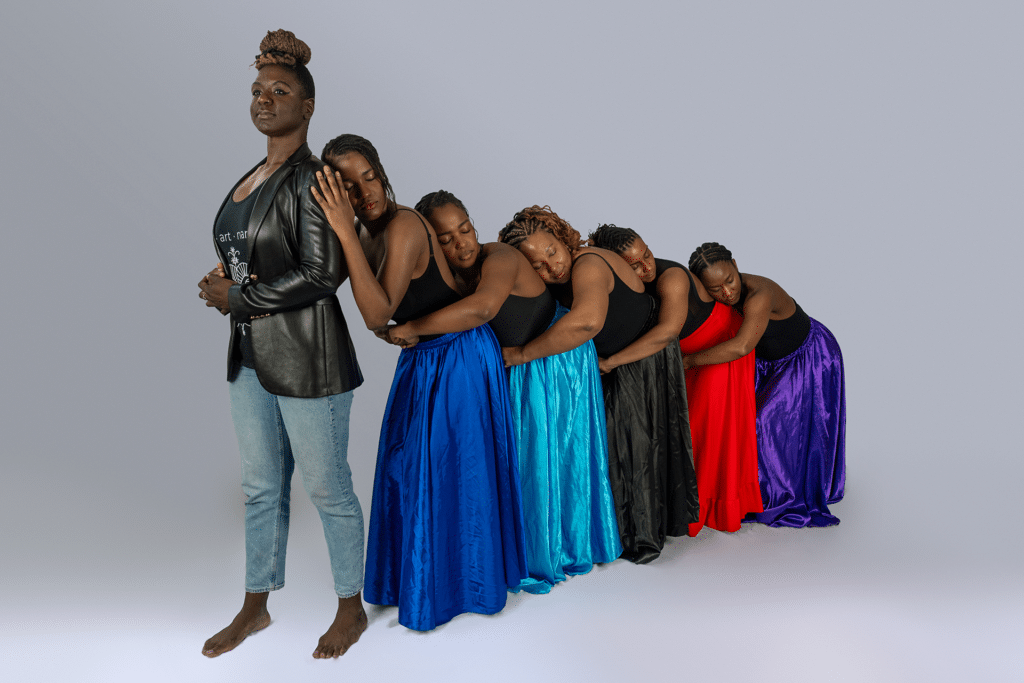
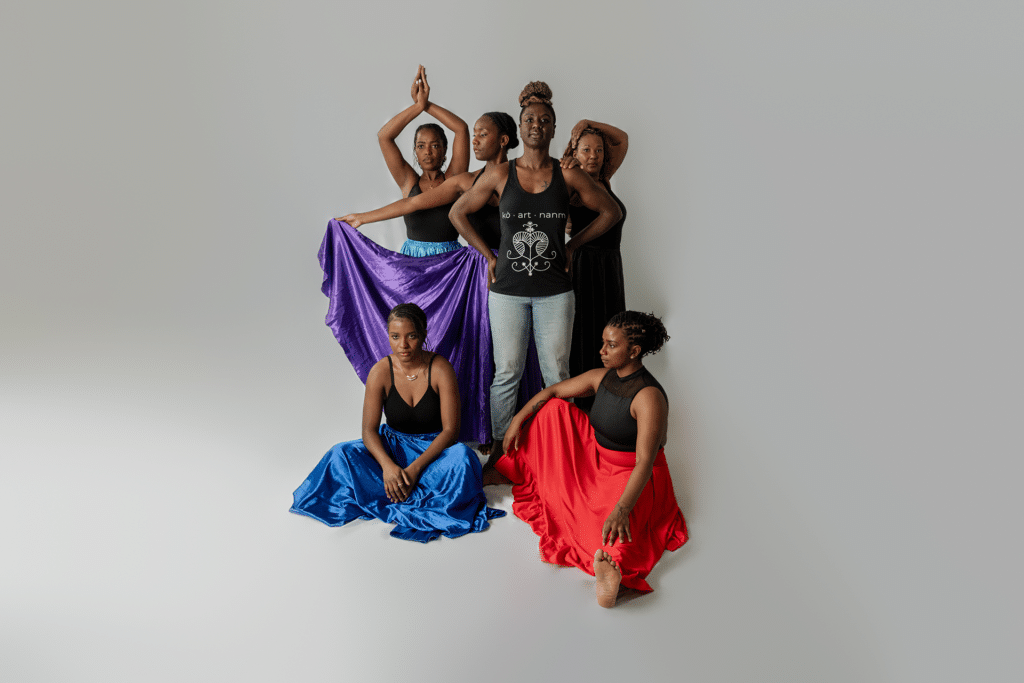
Entwospeksyon immerses us in the heart of the Haitian migrant experience through a multidisciplinary work that blends dance, sound, and visual arts. In a café-bar, Kiskeya finishes her shift. Exhausted, she finds herself in conversation with her inner world. Amidst fatigue and a search for meaning, she seeks the strength to carry on. At the intersection of the personal and the political, Entwospeksyon brings to life the realities of the diaspora; those that inhabit, traverse, and transform. A vibrant work that pays tribute to Haiti, to intangible heritage and to the ability to move forward in spite of adversity.


Residencies Centre des Arts de la Maison d’Haïti, Centre Création Danse Nyata Nyata, Tangente
Abigail Michel is a movement practitioner and performer originally from Haiti, now based in Montréal. She uses dance and movement as tools for transformation and resistance, and as a way of inhabiting the world. Her artistic practice explores the human experience and seeks to embody inner narratives through the rich gestural and symbolic language of traditional Haitian dance. Abigail holds a Bachelor of Arts (specialization in Humanities) from York University and completed the Professional Dance Training and Education Program (PEFAPDA) at Zab Maboungou/Compagnie Danse Nyata Nyata. She joined the Ekspresyon collective in 2021 as a way to reconnect with her culture and community, with whom she has participated in several choreographic creations. In 2023, she began teaching there and, in 2025, became its artistic director.
Aïka Mathelier is a choreographer and teacher, and has been a member of Ekspresyon since 2011. She served as the company’s Executive and Artistic Director from 2019 to 2025. In 2019, she co-founded Espas YOUN, an annual intensive seminar on traditional Haitian dance, with Shérane Figaro and Cindy Belotte. Trained in Haiti from 1993 to 2007 at the Haitian American Academy of Ballet & Arts, she joined the Haitian-American Contemporary Dance Theatre and continued her training in Montréal during an intensive seminar at Ballet Divertimento in 2005. She was awarded a gold medal at the DansEncore Festival in 2009 and the Centre des Arts de la Maison d’Haïti’s Emerging Dance Artist Award in 2024. She was also part of the 2025–2026 cohort of Studio 303’s residency program. Her choreographic approach, deeply rooted in collaboration, weaves together Haitian traditions, ballet, and contemporary movement vocabularies, while incorporating urban and jazz influences.
Magdaléna Plétan is a dance artist and educator. She embodies a movement language at the crossroads of urban styles, African techniques, and ongoing somatic exploration. Her artistic identity was profoundly grounded during a pivotal encounter with Germaine Acogny at École des Sables, where she embraced a vision of the body that is both sensitive and powerful. Since 2024, she has furthered this journey with the Ekspresyon company, immersing herself in the living memory and technical precision of Haitian dances. Currently a master’s researcher at UQAM, she examines the concepts of the “living column” and welcoming rituals to investigate the traces of movement. As an inclusive dance instructor, she is committed to making dance an accessible language of connection, bridging cultural heritage with contemporary expression.
Soraya Toussaint has been dancing since the age of two, guided from an early age by her energy and natural sense of rhythm. She trained in ballet, jazz ballet, contemporary dance and Haitian folklore, developing a rich and diverse technical foundation. After moving to Montréal, she broadened her practice by exploring urban styles such as dancehall and Afrobeat, which further enriched her artistic identity. In 2025, she joined the Ekspresyon troupe, where she deepened her knowledge of traditional Haitian dances. In 2026, she began her career in dance as a teacher. Through her teaching, Soraya aims to share Haitian culture, challenge the stigmas surrounding traditional dances and spread positive energy.
Chloë Bonnet has been dancing since the age of three and has a solid background in classical ballet as well as several other dance styles. Trained with the Royal Academy of Dance and at the Ontario Centre of Artistic Excellence (2009–2013), she has performed at major venues in Ottawa. In 2018, she moved to New York to further her training at renowned schools and to collaborate with various choreographers. Returning to Ottawa in 2020, she teaches, creates and participates in artistic projects. A member of the Ontario College of Teachers, she trains future teachers and dancers. Since 2024, she has been dancing with Ekspresyon in Montréal.
Mikaèle Alexandre is a naturally curious woman who loves exploring movement in its various forms. Starting with gymnastics, she then moved towards dance, specifically hip hop and contemporary. She has explored heels, house, whacking and, more recently, traditional Haitian dances and yoga. While heels is her preferred dance style, giving her wings and empowering her, it is traditional Haitian dances that connect her to her spirituality, her roots, and her family’s culture.
Luchida Michel is a self-taught multidisciplinary artist, physical health consultant, and naturopathic practitioner based in Montréal. She creates and performs work that weaves poetry, movement, and collective healing. Her practice treats the body as a site of memory, identity, and transformation. Drawing from social dance, contemporary movement, theatre and improvisation, she has developed a physical language rooted in conscious movement and the traditional wisdom of the Yi Jing. A first-level dance performer with Ekspresyon since 2024, she is also deeply engaged in community-based arts and non-profit spaces. For her, movement is as much a political act as it is an act of care.
Passionate about dance since childhood, Sarah-Lynn Joseph has developed her art in a self-taught way, guided by the joy of moving freely. For her, movement is a way to love oneself, reconnect with who you are and express yourself fully, which also leads her to practice sports regularly. After moving to Montréal, she trained in dancehall and Afrobeat and performed in several shows. In 2018, her encounter with Ekspresyon allowed her to explore a new dimension of her Haitian identity through dance. Since 2021, she has been sharing this passion by teaching with energy and authenticity.
Passionate about dance since childhood, Béatrice Paul-Roc has explored various styles, including jazz ballet, hip hop, baladi, Afrobeat, and contemporary dance. As a teenager, she also developed a strong interest in choreography by creating and performing her own pieces. Her encounter with Régine Cadet at Studio Montecristo marked the beginning of her journey in traditional Haitian dance, which she later continued at Académie de danse Pascale Durosier, along with specialized workshops led by Shérane Figaro. She further refined her artistic practice through training with Sibyl Graham and Aïka Mathelier of Ekspresyon and Ayiti Pazapa. Today, as a dance instructor at Ekspresyon, Béatrice passionately shares her expertise while actively contributing to the promotion of Haitian culture through teaching, artistic creation, and performance.
Born in Port-au-Prince in 1981, Ronald Nazaire began his training with his father, a master of Haitian percussion and rhythms. At the age of 11, he joined the national troupe and represented Haiti as a musician. His talent was quickly recognized by the socially engaged group Kampèch, with whom he performed across Haiti and the United States at events such as the Haitian Carnival, the Louisiana Jazz Festival, and the Roots and Culture Festival in Miami and New York. After arriving in Montréal in 2008, he became active in the local artistic scene and collaborated with several Haitian artists as well as the group Rara Soley.
Born in Montréal to Haitian parents, percussionist Karl-Henry Brezault has made it his mission to preserve and share the richness of his heritage through its traditional rhythms. Drawn to this mysterious instrument from an early age, he began studying it seriously in 2005 and has since had the opportunity to learn by playing alongside master percussionists such as Wikenson from Haiti, Jean Rody Joseph and Ronald Nazaire, to name but a few. He is now active on the Montréal arts scene as a member and co-founder of the traditional music group Rara Soley, and also as a member of Ayiti Percu, a group dedicated to passing on knowledge by offering workshops and percussion lessons to groups of all ages.
Jivings Hilaire is a percussionist born in the United States and raised in Canada, with a soul deeply rooted in Haiti. Inspired by his roots and the drum of freedom, he discovered his passion at a young age using a simple peanut butter container before learning traditional drumming. Through ancestral rhythms, he expresses the heritage of his ancestors and proudly shares his culture. His journey has led him to perform at festivals, sporting events and community activities thanks to the knowledge he gained with the Ekspresyon dance troupe.
Kathleen Charles (she/they) is a Haitian performance artist, songstress, writer and creative arts therapist based in Tio’tia:ke (Montréal). As of now, their practice is heavily informed by Black feminist thought, Black speculative fiction, re-indigenization and the inherent liberatory nature of Haitian Vodoun spirituality. Through their artistic practice, they use movement, writing and voice as ancestral heirlooms or somatic spiritual technologies to form the foundation of a practice that is just as spiritual as it is artistic.
Nitsé Mathelier is a filmmaker and photographer. Born in Haiti, she moved to Montréal in 2009. Through her projects and her work, she seeks to promote a better understanding of Haitian culture and a more accurate representation of communities of African descent. In 2017, she became involved with the Ekspresyon collective, contributing her knowledge and skills in communication, photography, videography, social media, and visual identity. She has contributed to several video projects, including Lenglensou (2021), Tanboum Sa La (2021), and Yon ti limyè (2025). In 2020, she wrote and directed her first short film, KASE CHENN. She also took part in Main Film’s P.R.I.S.M.E training program. She is currently directing her first feature-length documentary, Memwa (due for release).
Our creative approach revolves around a dialogue between the body, memory and the diaspora experience. Drawing on the yanvalou, a dance of introspection from Haitian culture, we explore undulation as a means of navigating life, resisting, and reconnecting with our invisible heritage. The spine, as the central axis, supports and bears the traces of lived experience. Rooted in traditional Haitian dance, our choreography combines song, drums, and vèvè. The vèvè pattern of Ogou on the floor symbolizes the paths of displacement, physical and mental resilience, and the emotional tensions associated with migration. The collective’s and the community’s migration narratives inform states of being — fatigue, hope, adaptation — which we translate into movement, weaving a collective journey. Entwospeksyon becomes a sensitive space where gestures, rhythms and diasporic memories meet and transform.
Residencies

Residencies offered in partnership with

Studio for auditions loaned by

Dona-Bella Kassab & Shanyça Elie-Leconte’s project was supported by Codes d’accès, a partner of Tangente.